
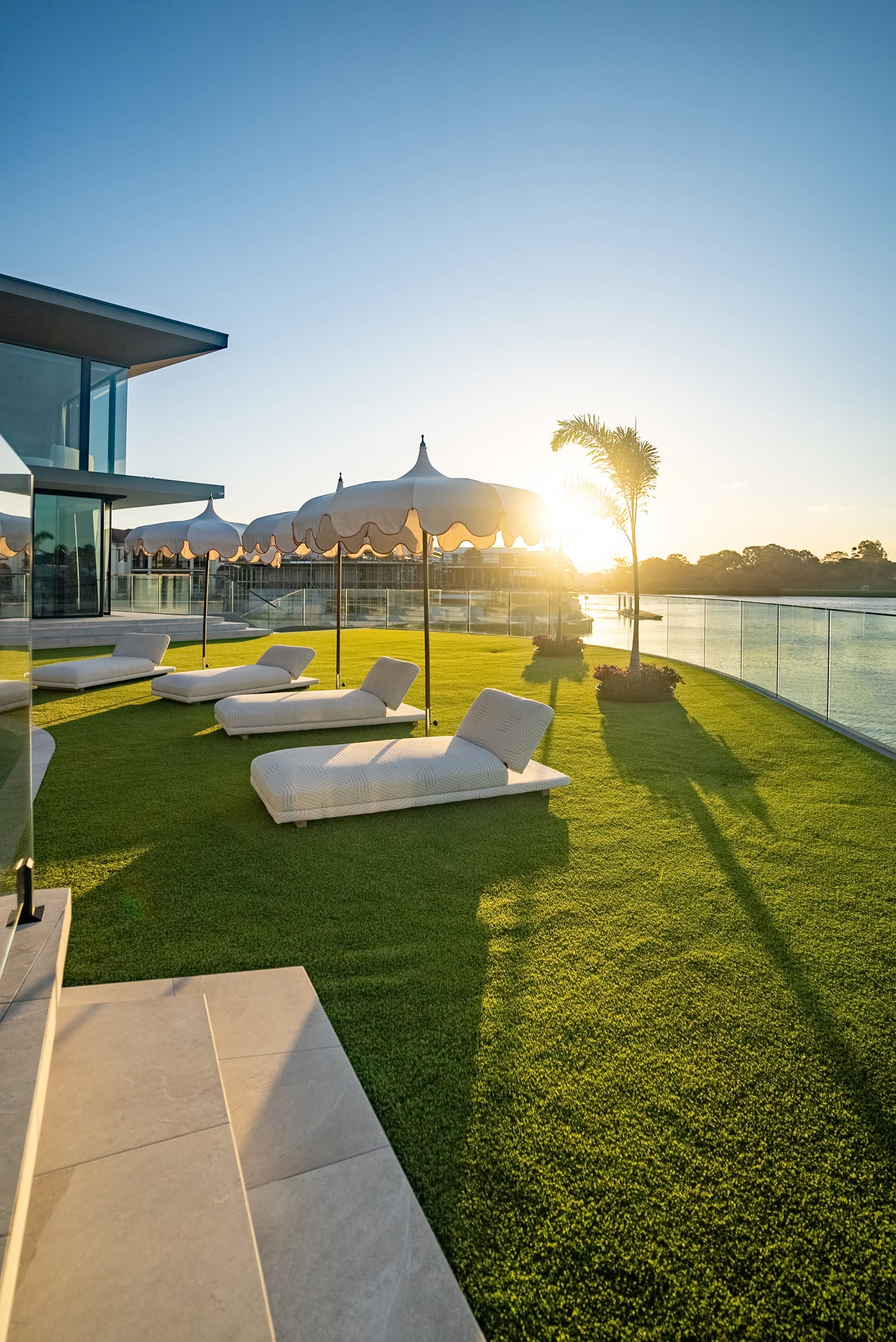
Most homeowners who contact us have a date in mind. They want the pool ready for summer, the entertaining area finished in time to host Christmas, or the garden complete before they move into a new home. That leads to the question we hear more than any other: how long will it all take?
The answer often surprises people, because construction is only part of the picture. Before anything is built, the property needs to be understood, the design developed and refined, and any engineering, approvals, materials and trades organised. Each step takes time, and each one shapes how smoothly the build runs once it begins.
How Long Does a Landscape Transformation Take?
There is no single answer, because the timeline depends on the scope of the project, the site, any engineering or approvals required and how soon construction can be scheduled. As a guide, the design stage usually takes up to six weeks from the first consultation to an approved design. From there, the time to reach construction and the length of the build vary from project to project.
Projects with a custom concrete pool generally take longer, because engineering and certification need to be completed before construction begins. We can give you a clearer idea of the timeline for your project during the initial consultation, once we have seen the property and talked through what you would like to achieve.
Key Takeaways
- A landscape transformation starts well before construction, with design, revisions, engineering, approvals and procurement all happening first.
- The design stage usually takes up to six weeks from the first consultation to an approved design, while the time to construction and the length of the build vary with each project.
- A concrete pool adds time before construction because of the engineering and certification involved.
- Construction generally moves from excavation and structural works through to paving, structures, planting and finishing, with some stages overlapping.
- Weather, site access, approvals, material availability, unexpected site conditions and design changes can all affect progress.
- If you have a completion date in mind, get in touch at least three months beforehand, and earlier for larger projects.
The Stages of a Complete Landscape Design and Construction Project
To understand where the time goes, it helps to follow a full-service landscaping project from the first conversation through to handover. The order below is typical rather than fixed, and on most projects some stages overlap.
Stage 1: Initial Consultation and Project Brief
Every project begins with a conversation about the property and how you want to use it. How often do you entertain, and for how many people? Do you want a pool, an outdoor kitchen or a covered area to use year-round? Talking through these questions, along with your design preferences, budget and any completion date, gives the design team a clear brief.
Our paid on-site consultation runs for at least an hour, with a landscape architect and a sales estimator walking the property with you. It sets the direction for the project rather than producing a finished design, and we send through a design proposal within 24 hours of the visit. Our article on your first landscape design consultation explains how to prepare.

Stage 2: Site Assessment and Feasibility
While the consultation focuses on what you would like to achieve, the site assessment looks at what the property will allow. Levels determine how much excavation and retaining is needed, drainage shows where water will go in heavy rain, and orientation affects where the pool, shade and planting will work best.
Access matters just as much. A narrow side passage or tight rear boundary limits the machinery that can reach the backyard, which affects how the design is built and how long it takes. Identifying these constraints early, sometimes with a survey or specialist assessment, means the design can work around them rather than the team discovering mid-build that a feature will be difficult or costly to construct.
Stage 3: Concept Landscape Design
With the brief and site understood, the landscape architect develops a concept for the whole property. This resolves how the home connects to the garden, where the pool sits, how people move between entertaining areas, how level changes are handled and where major structures belong.
Many later decisions depend on this layout. A pool’s position determines the extent of excavation, the drainage, the fencing and the paving around it.

The concept also needs to reflect the budget so it can realistically be built. It is typically presented four to five weeks after the consultation.
Stage 4: Client Feedback and Design Revisions
You then review the layout, features and materials, and consider how well each area suits the way you live. Most designs need one round of revisions, and the final design is usually approved within six weeks of the first consultation.
This is the easiest point to change direction. Moving a pool on a plan takes some design time, but moving it after excavation has started affects the schedule, the trades and the budget.
Stage 5: Detailed Design, Engineering and Approvals
The approved concept is developed into a detailed 2D plan, with 3D visualisation available if you would like to see the space before it is built. This is where the landscape design is developed into the documentation needed for construction.
Depending on the project, this stage may also involve structural or retaining wall engineering, drainage design, pool documentation and approvals. Requirements depend on the proposed works and the site, and approval pathways differ between Queensland and New South Wales. We manage the engineers, certification and approvals for you, although consultants and authorities work to their own timeframes. Engineering, certification and approvals are among the reasons projects with a concrete pool can take longer to reach construction.
Stage 6: Construction Planning, Procurement and Scheduling
While approvals progress, the team prepares for the build. Pricing and contracts are finalised, materials are pre-ordered, subcontractors are booked and site access and deliveries are planned, so each part of the project can start when the previous stage is ready.
Specialist finishes, custom features and some plant stock have longer lead times, so ordering them early avoids the site waiting on deliveries. Where appropriate, coordinating this work alongside approvals can reduce unnecessary waiting between stages.

Stage 7: Site Preparation, Demolition and Earthworks
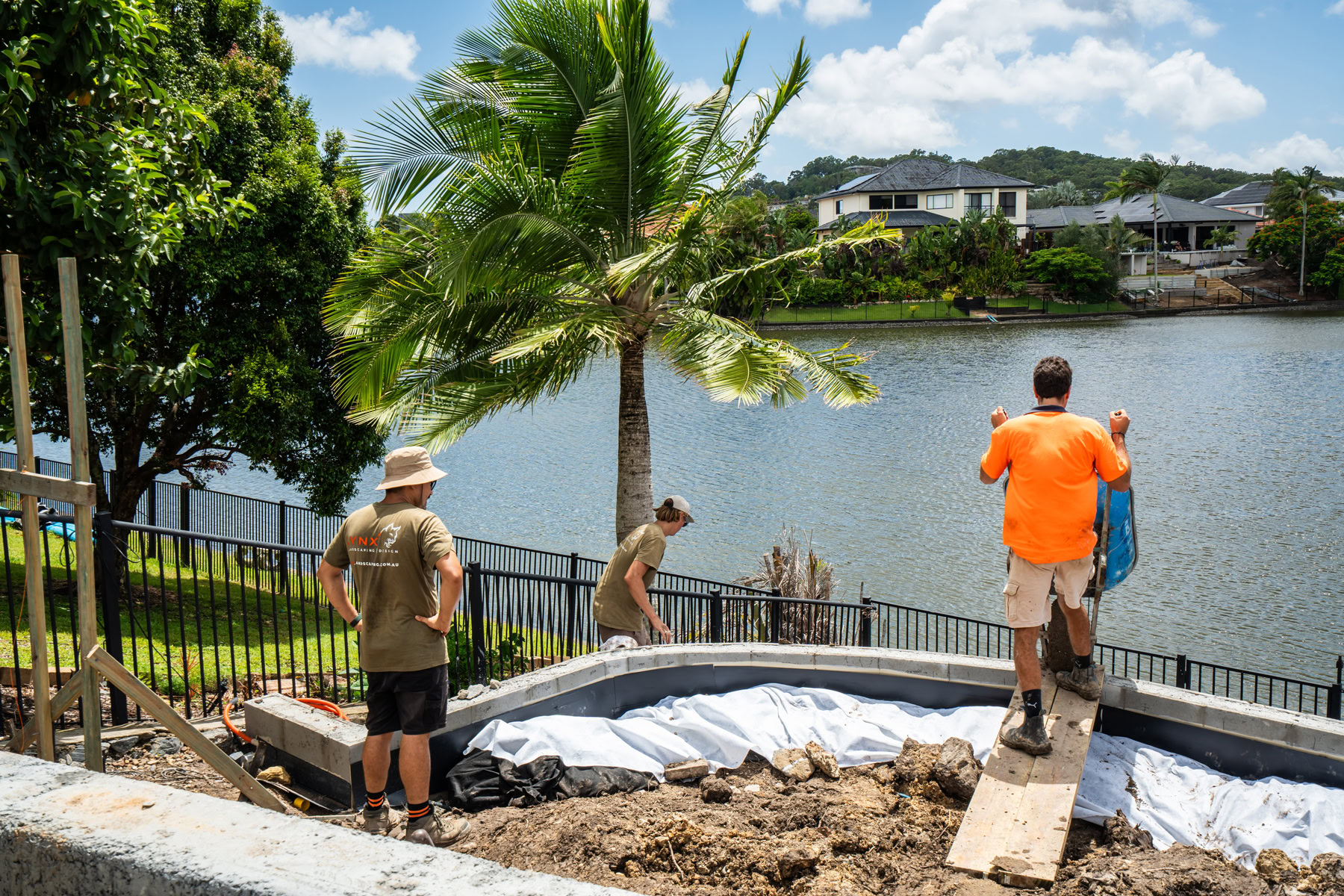
Physical work begins by establishing access and protecting anything that is staying, such as the home, existing trees or neighbouring fences. Demolition, clearing, excavation and levelling follow, along with preparation for foundations and drainage.
This stage takes longer on sloping, waterfront and restricted-access properties. Where large machinery cannot reach the backyard, the team may use smaller equipment, create a new access point or remove material in stages, which is why these constraints are identified during the site assessment.
Stage 8: Structural Landscaping and Pool Construction
Next comes the structural framework of the landscape: retaining walls, footings, stairs and level changes, foundations for outdoor structures and the underground drainage and services everything else sits on.
On pool projects, this is also when custom concrete pool construction takes place, moving through excavation, structural works, curing and finishing. Because Lynx coordinates pool construction alongside the wider landscape works, the pool, its retaining and the surrounding drainage can be planned and scheduled as part of the same project, rather than treated as separate works.
Stage 9: Hardscaping and Outdoor Living Areas
Once the structural work is sufficiently advanced, the visible parts of the design take shape, from paving and pool surrounds to decking, outdoor kitchens, pergolas, pathways and feature walls. This is usually when homeowners first see the design come together. Progress also becomes less linear, as different trades may work in different areas at once, so one part of the site can look finished while another is still underway.
Stage 10: Planting, Irrigation and Finishing Details
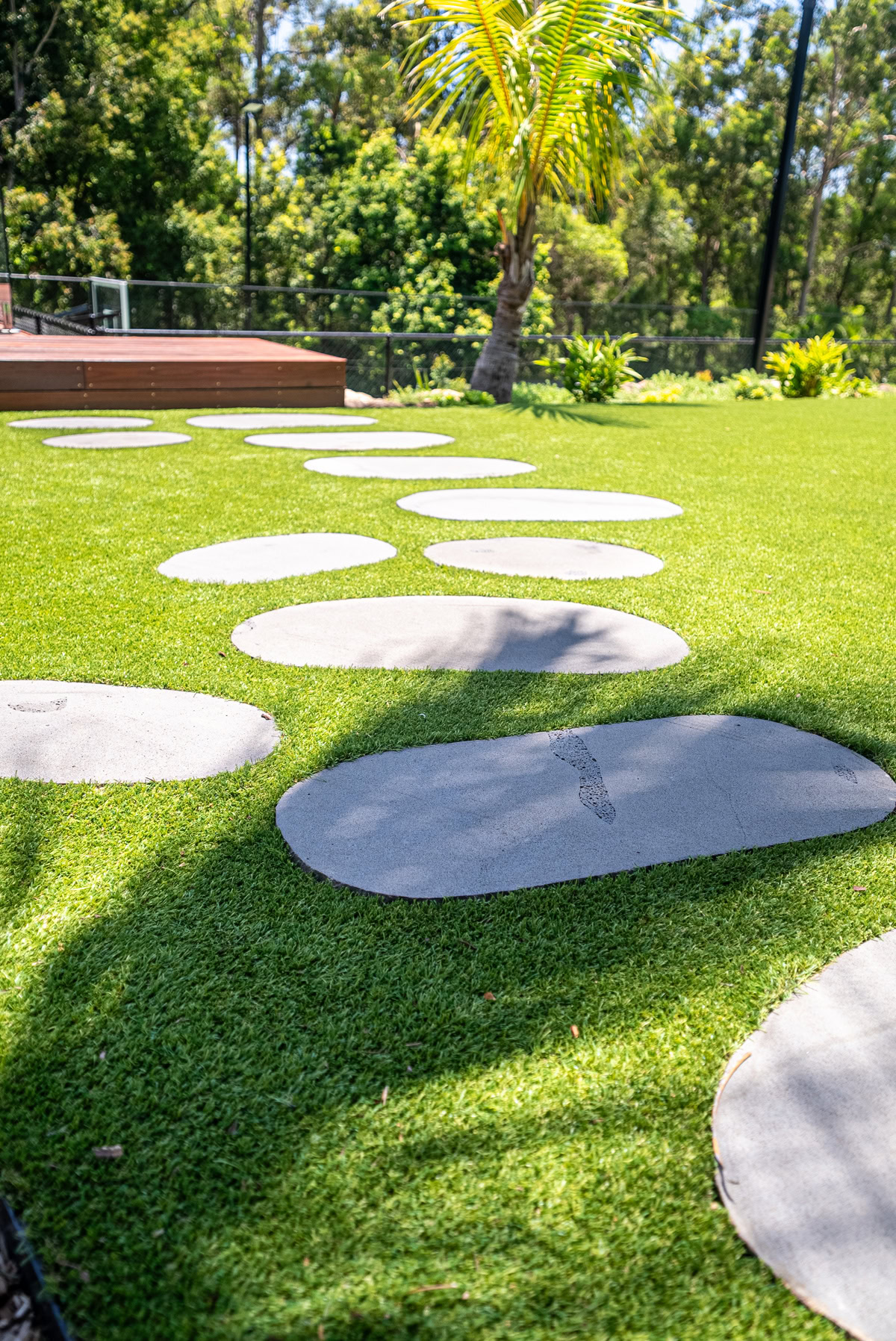
Planting goes in towards the end of the build, but it is planned from the start so it supports the layout rather than being added as decoration. Soil preparation, garden beds, trees and shrubs, turf, irrigation, lighting and mulching complete the landscape, followed by a thorough clean-up. Weather can influence some of this work, particularly turf and larger plant stock.
Stage 11: Final Checks and Project Handover
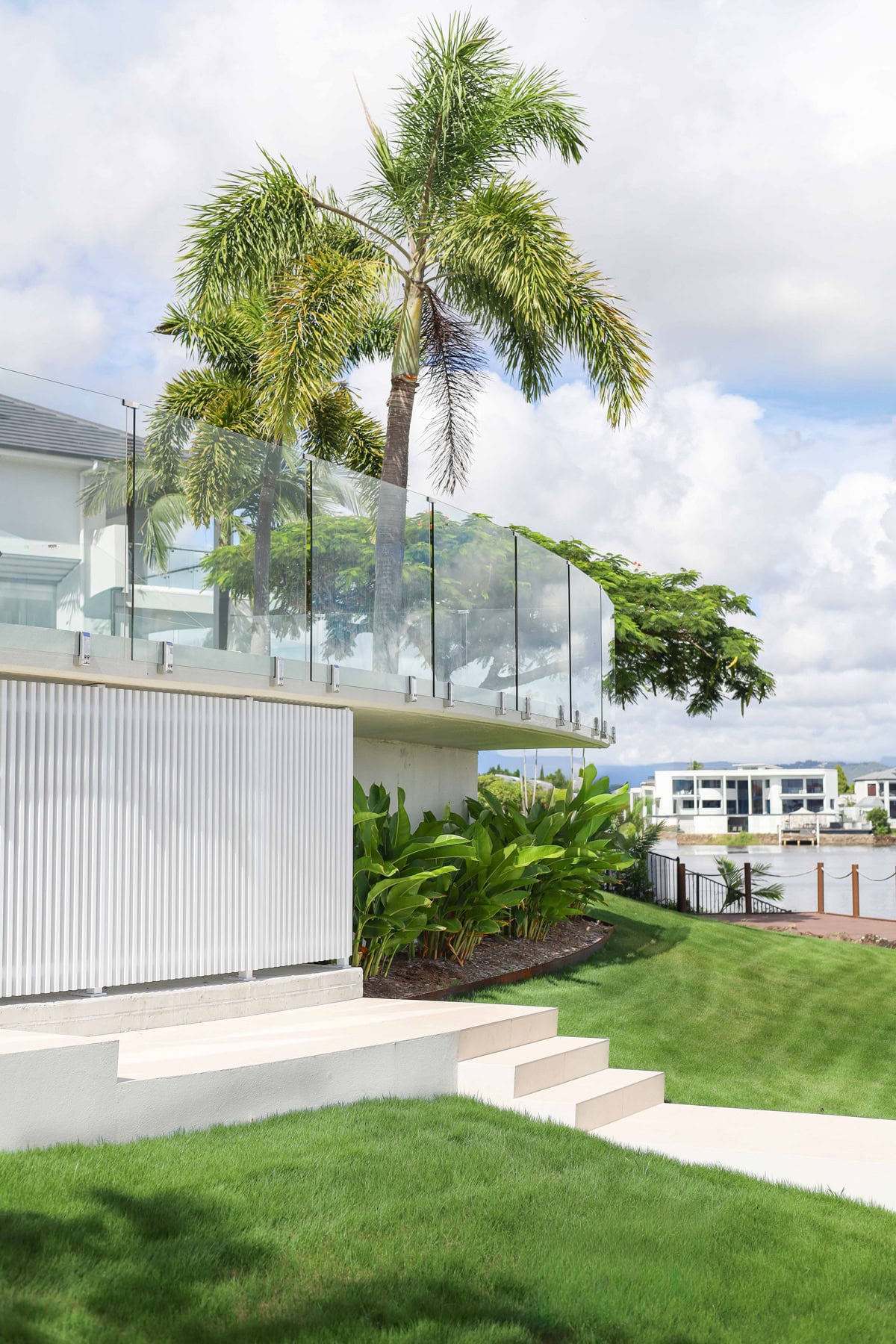
Completion involves more than finishing the last task. Our handover includes final inspections, a walkthrough of the completed works with you and maintenance instructions. Depending on the scope, it can also include testing irrigation, lighting or pool equipment and addressing any outstanding items.


What Can Affect the Timeline of a Landscape Project?
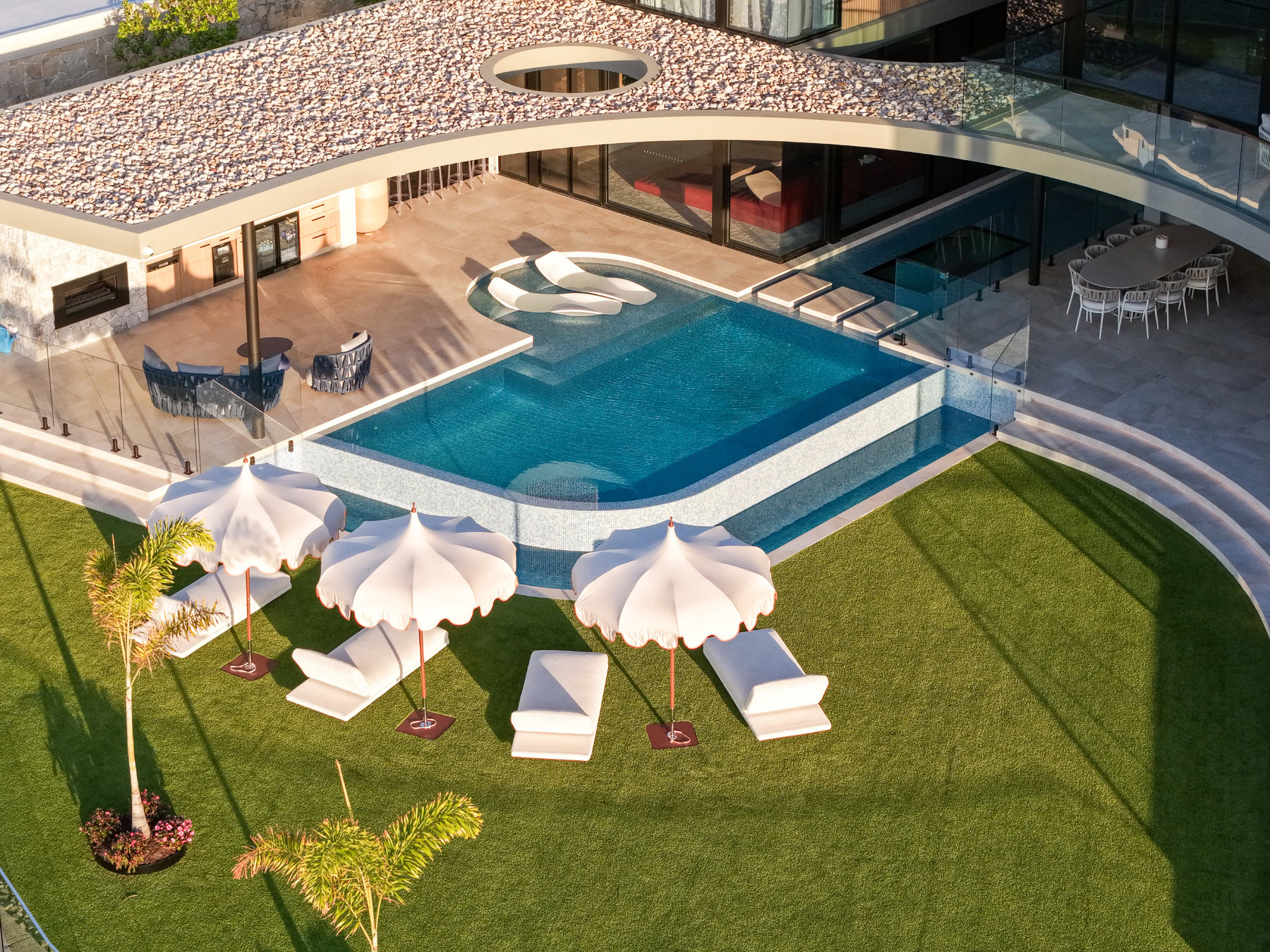
Each stage has its own variables, but the factors that most often extend a project fall into a few common areas.
Project Size and Complexity
A transformation combining a concrete pool, outdoor kitchen, retaining walls and extensive planting involves more trades and more dependent steps than a simpler project. The same factors shape the cost of a full landscape transformation, so scope decisions influence the budget and schedule together.
Site Conditions and Access
Sloping blocks, waterfront properties and restricted access make moving machinery and materials more involved. Even with careful assessment, conditions uncovered once work begins, such as hidden rock or old footings, can add time.
Engineering, Approvals and Materials
Pools, retaining walls and some structures may need engineering or certification before work starts, and these processes involve external consultants. Specialist materials with long lead times can also hold up a stage if they are not ordered early.
Weather and Scope Changes
Heavy rain on the Gold Coast and in Northern NSW can affect excavation and earthworks, although other work can often continue during a wet spell. Significant changes after construction starts can affect pricing, orders and the sequence of work, which is why resolving decisions during design is so valuable.
How Professional Project Management Keeps Everything Moving
Many of these factors can be managed with good coordination. Landscape project management covers much more than supervising work on site. It involves coordinating engineers, certifiers and subcontractors, sequencing the work, scheduling deliveries and responding to unexpected conditions.
Sequencing is a large part of this. Some activities can run at the same time, while others cannot start until the previous one is complete. Underground drainage and services, for example, need to be in place before finished paving goes down over the top.
Because Lynx Landscaping designs and builds as one team, project management begins during design and continues through to handover. A project coordinator and project manager stay in regular contact with you throughout, with meetings and progress updates along the way. This does not remove the possibility of delays, but when something changes, one team is responsible for adjusting the plan and keeping you informed.
How Far Ahead Should You Start Planning?
We recommend getting in touch at least three months before you would like the project finished. For larger transformations, particularly those with a new concrete pool, earlier is better, as design, approvals and construction can extend well beyond that planning window.
The most common mistake is working backwards from the construction period alone. An eight-week build planned only ten weeks ahead leaves little room for design, revisions, approvals, procurement or unexpected delays. Starting early gives you time to make decisions without pressure, and if you have a date in mind, mention it at your first consultation so the team can talk you through what is realistic.
Real Project Examples: How Timelines Differ
Two of our waterfront projects show how scope and site conditions can result in very different project timeframes.
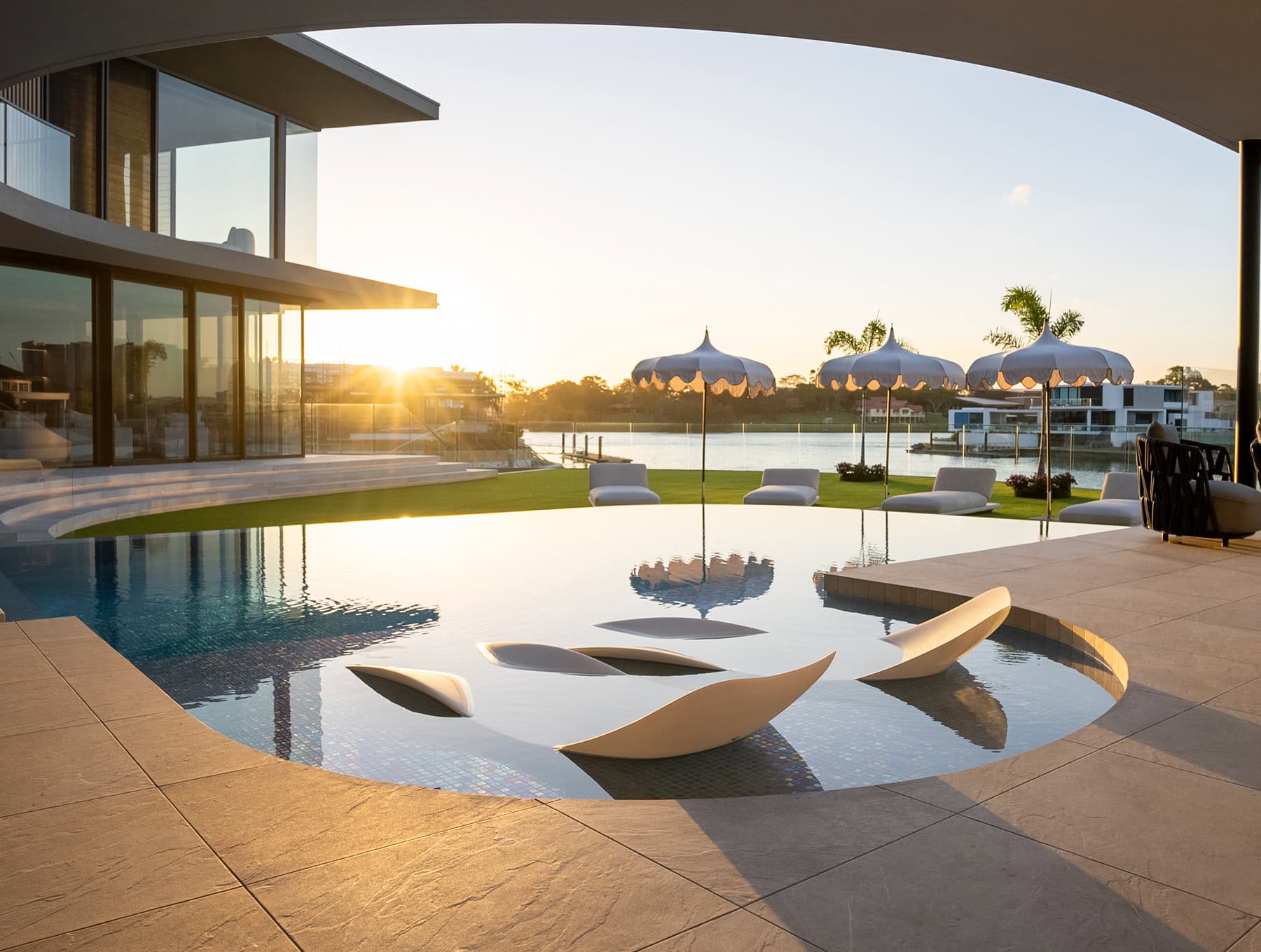
The Burleigh Waters project had a reported 15-week project duration. The 803sqm block was heavily terraced, with no flat usable outdoor area, and existing boundary conditions restricted machinery access. Removing the side boundary wall created a working entry point for demolition, excavation and the pool dig. The finished project includes a custom pool, curved custom block walls and glass-panel fencing.


The Clear Water Bay project in Clear Island Waters had a reported eight-week project duration. This property also had difficult rear access, which the team solved by building two new concrete access points. The scope was a renovation of the existing pool area, finished in pebblecrete and mosaic tile, along with new retaining walls and updated planting.
Both sites had access challenges, but the scope differed substantially. A new pool on a heavily terraced site involves far more excavation and structural work than renovating an existing one, which helps explain the longer timeframe for our Burleigh project.
Ready to Plan Your Landscape Transformation?
Much of a landscape project’s timeline is determined before construction begins. Allowing enough time for design, approvals and planning helps the construction stage progress in the right sequence and reduces the need to rush important decisions.
Lynx Landscaping provides complete landscape design and construction across the Gold Coast and Northern NSW, from custom concrete pools to full outdoor transformations.
If you are planning a project with a completion date in mind, contact Lynx Landscaping or call us on 0491 303 867 to talk through your plans and the next steps.
Frequently Asked Questions:
How long does it take to design a complete landscape?
Allow around six weeks from the first consultation to an approved design. The initial concept is typically presented within four to five weeks, with most projects requiring one round of revisions before the design is approved.
How long does landscaping take once construction starts?
It depends on the scope and the site. The Sovereign project in Mermaid Waters, which added a timber deck, an enclosed patio and a custom concrete BBQ bench, was completed in four weeks. The Santa Cruz project in Clear Island Waters, which turned a disused tennis court into a private chip-and-putt course on a site too tight for cranes or large machinery, took seven weeks.
Does landscape design need to be completed before construction begins?
The major decisions should be, as layout, levels and pool position determine how the build proceeds. Some preparation, such as ordering long-lead materials and booking subcontractors, can begin while final details are confirmed.
Do I need council approval for landscaping on the Gold Coast?
It depends on the works involved. Swimming pools, some retaining walls and certain built structures may need approval, engineering or certification, while many other landscaping works do not. Requirements also differ between Queensland and New South Wales, so they are best identified during design and managed as part of the project.
How long does it take to build a concrete pool and complete the surrounding landscaping?
There is no standard timeframe, as it depends on the pool design, site conditions, access and approvals. A new pool can take longer to reach construction because of engineering and certification, and once building starts, the pool, retaining, drainage and surrounds need to be completed in sequence.
Can landscaping be completed while a new home is being built?
Design and planning can often begin while the house is under construction, so levels, drainage, retaining and any pool can be considered alongside the home. The landscape works need to be coordinated with the builder and generally start once the site is accessible.
What happens if there are delays during landscape construction?
Your project coordinator or project manager will let you know what has happened, how it affects the timeline and what the revised plan is. Where possible, the work is resequenced so other activities keep moving while the issue is resolved.