
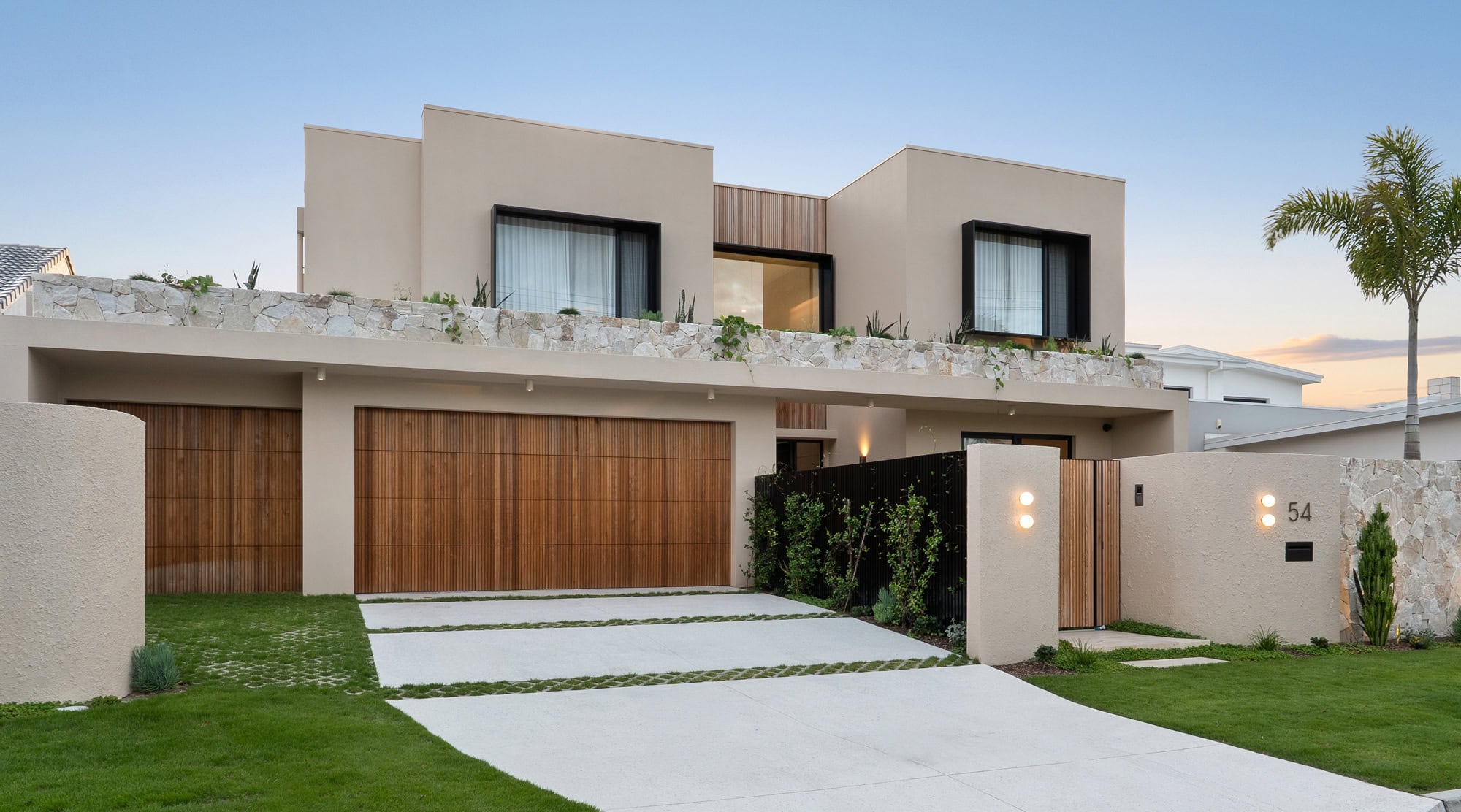
For a substantial, design-led landscape transformation on the Gold Coast, indicative project investments generally range from around $120,000 to $400,000+, depending on the scope of the project and the property itself. While the size of the block plays a part, it is rarely the biggest influence on cost. Site conditions, structural requirements, access, material selections and the features being incorporated can all have a far greater impact on the final investment.
This guide focuses on full landscape design and construction, where the outdoor environment is considered as a whole and delivered as one coordinated project. It does not refer to garden maintenance, lawn replacement or smaller standalone landscaping jobs.
The figures throughout are inclusive of GST and should be used as a guide rather than fixed pricing. Landscape design fees are separate and vary according to the property, project scope and level of design documentation required.
Key Takeaways
- A full landscape transformation involves much more than planting and turf. It can include professional design, excavation, structural landscaping, drainage, hardscaping, lighting, irrigation, outdoor living areas and pool construction.
- There is no reliable single cost per square metre for a complete transformation because the scope and complexity of each property can vary considerably.
- Site access, slope, excavation and retaining requirements can have a significant impact on construction costs. Sloping blocks can be particularly involved, with earthworks and retaining often required before the landscape itself can take shape.
- Pools, extensive paving, outdoor kitchens and pavilions add considerably to the scope and are best considered as part of one integrated outdoor design.
- Two properties of a similar size can require very different budgets depending on site conditions, design complexity, material selections and structural requirements.
- Establishing a realistic budget during the design phase allows the project to be shaped around the homeowner’s priorities and can reduce the need for costly variations or redesigns later.
What Do We Mean by a "Full Landscape Transformation"?
A full landscape transformation takes a comprehensive look at the entire outdoor environment, with each element planned and constructed as part of one cohesive project. It goes well beyond mowing, garden clean-ups, turf replacement or an isolated job such as a standalone retaining wall.
The process starts with a considered design that addresses the structure and function of the property as a whole: levels, drainage, hardscaping, planting and the way each outdoor area connects with the home and supports how the owners want to use the space.
This is the type of work Lynx Landscaping specialises in, designing and building complete outdoor environments across the Gold Coast and Northern NSW, from substantial backyard renovations to fully integrated pool and entertaining projects.
Because landscape design and landscape construction are managed under one roof, the transition from design into construction is much more seamless. The team developing the design remains involved as the project progresses, helping ensure the original intent is carried through into the finished landscape.
What Does a Full Landscape Transformation Cost on the Gold Coast?
The profiles below provide an indication of the investment involved in different types of substantial landscaping projects. They are not intended as fixed packages or consecutive price bands, and projects may fall between or outside these ranges depending on the site, scope and level of specification.
| Project Profile | Indicative Investment | What It Typically Involves |
|---|---|---|
| Comprehensive transformation | From $120,000 to $160,000+ | A substantial redesign across multiple landscape elements, without extensive structural work, retaining walls or a pool. |
| Premium full-property transformation | Typically $250,000 to $350,000+ | More extensive construction, premium hardscaping, retaining, outdoor entertaining and custom detailing. |
| Bespoke landscape with custom concrete pool | Typically $300,000 to $400,000+ | An integrated design incorporating a custom concrete pool and significant surrounding landscape construction. |
These construction investment ranges exclude landscape design fees, which are quoted separately according to the scope and level of documentation required. Even with a similar brief, the final investment can vary significantly depending on the property and site conditions, with pricing confirmed once the scope is properly understood.
Comprehensive Landscape Transformation
A comprehensive transformation involves a substantial redesign of the outdoor space, delivered as a coordinated project rather than a collection of smaller upgrades completed over time.
At this level, the project will generally include a considered overall design and a significant reworking of the property’s usable outdoor areas, without necessarily involving extensive retaining, major structural works or a swimming pool.
It should not be thought of as a basic or budget approach. It is still a complete transformation, suited to homeowners who want the different elements of their landscape to work together as one well-planned space.
Premium Full-Property Transformation
A premium full-property transformation generally involves a greater level of construction and complexity. This may include extensive hardscaping, retaining walls and changes in level, custom materials, outdoor entertaining areas, exterior lighting, mature planting and more involved site preparation.
At this scale, the project often does more than refresh the existing landscape. It can reshape how the property functions, creating new levels, connections and usable spaces that fundamentally change the outdoor environment.
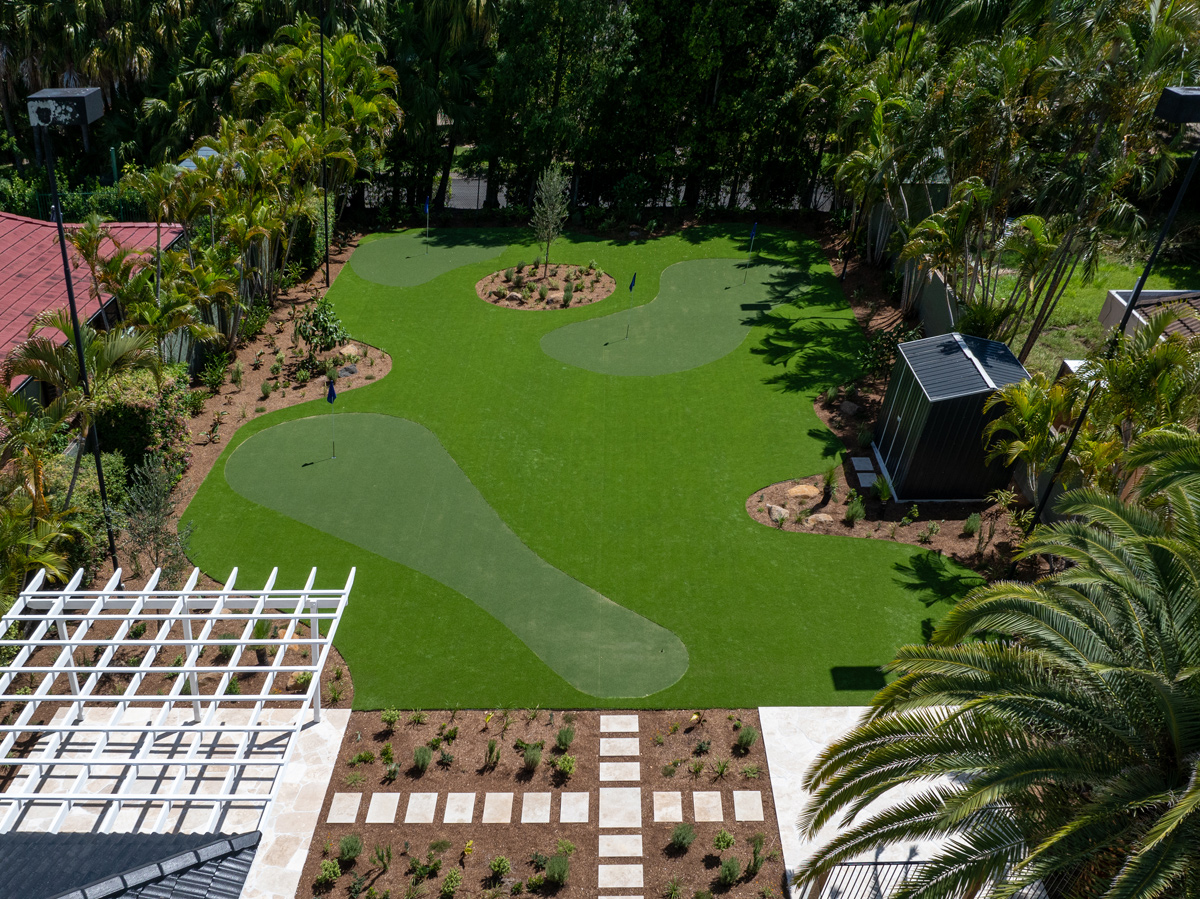
The Santa Cruz project in Clear Island Waters is a strong example of this type of transformation. This $250,000 project was completed over seven weeks and reimagined a disused tennis court into a private chip-and-putt golf course, complete with custom shaping, soft landscape integration, restored court lighting and a fully playable backyard green designed for everyday use.
Bespoke Transformation Including a Concrete Pool
At the upper end of the scale are fully integrated projects centred around a custom concrete pool, together with pool surrounds, retaining, entertaining areas, an outdoor kitchen or pavilion where required, premium finishes and complete project coordination.
The real value at this level comes from integration. When the pool and surrounding landscape are designed together, important considerations such as excavation, access, levels, drainage, paving and entertaining areas can all be resolved as part of the same plan.
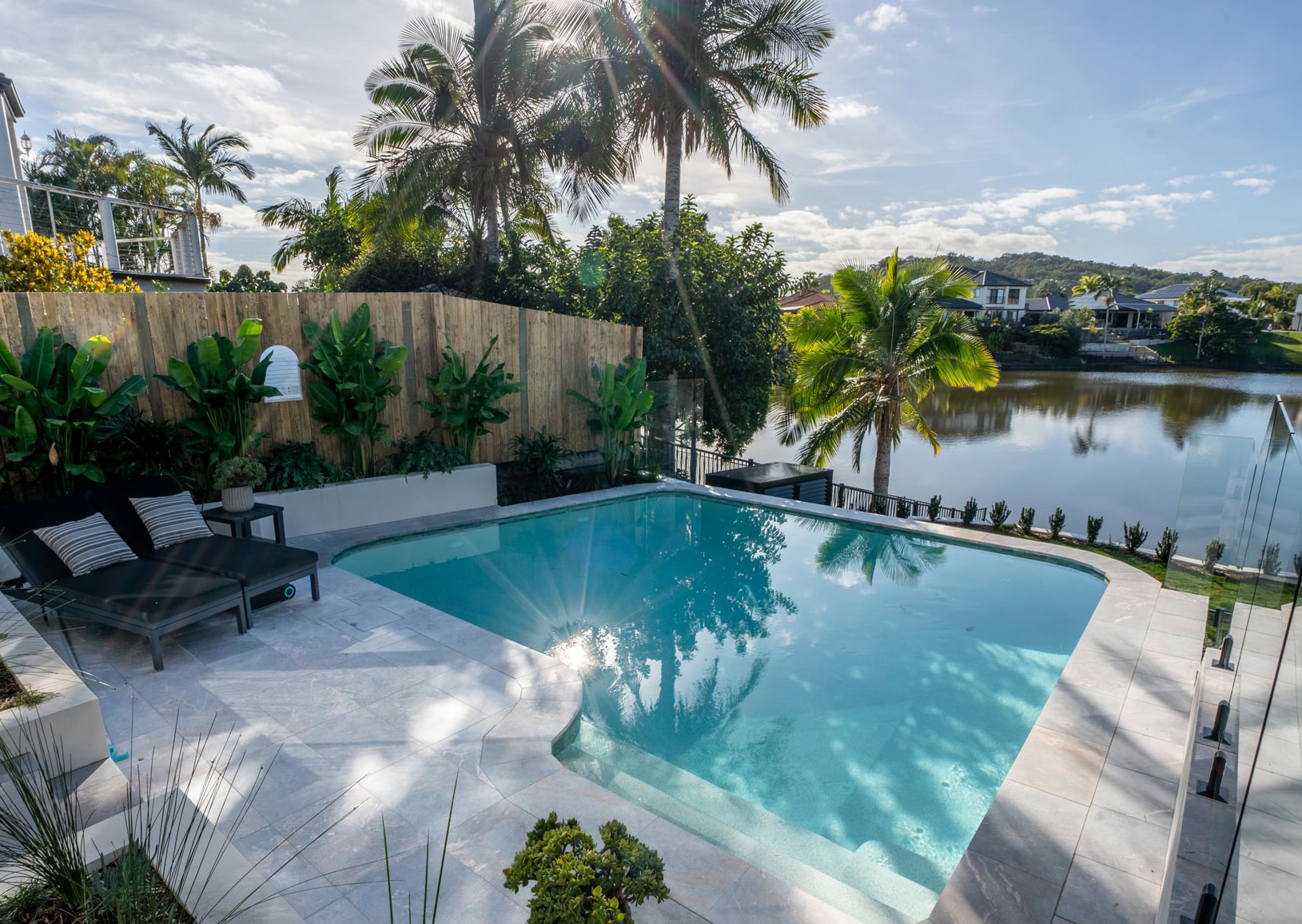
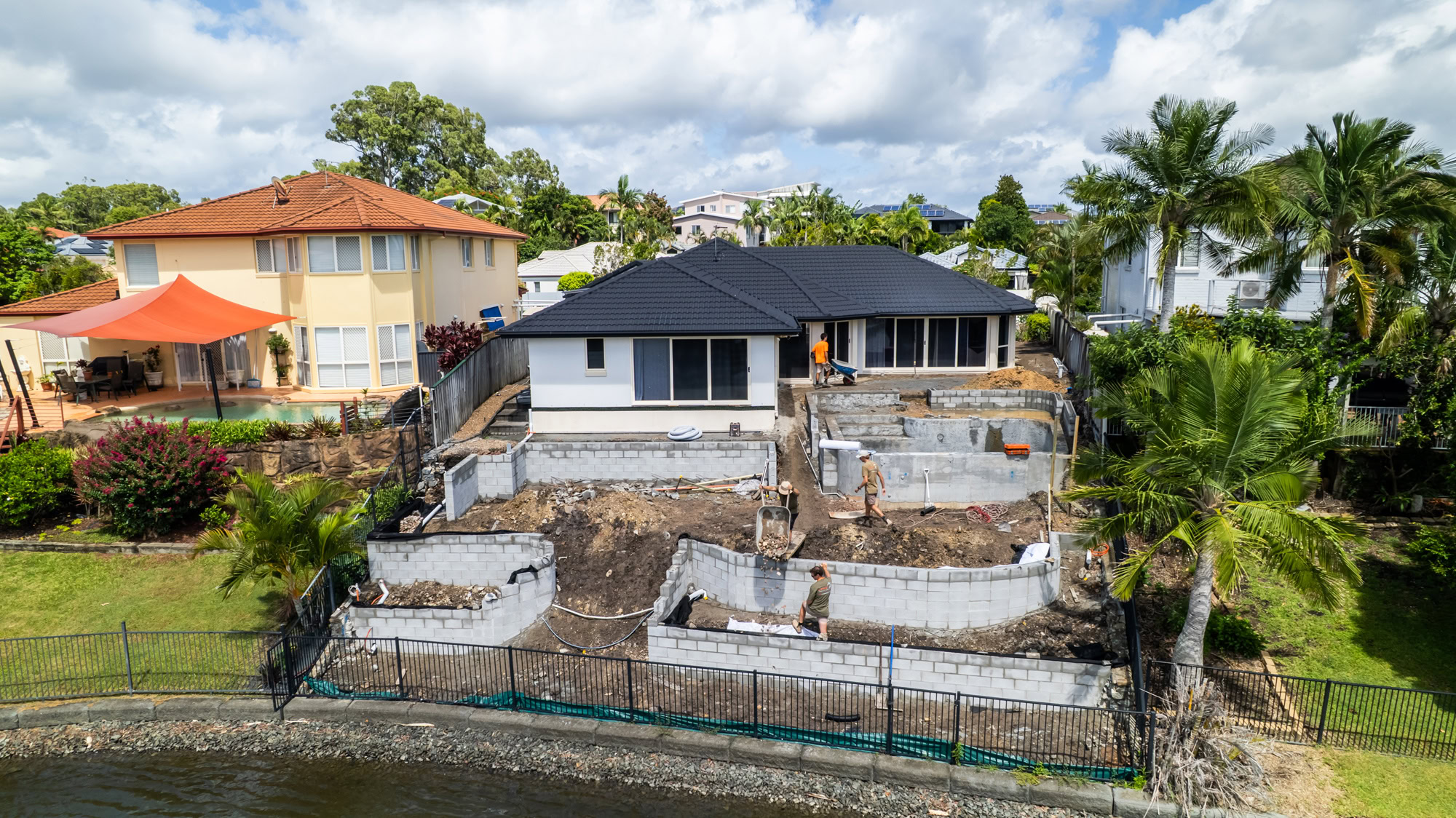
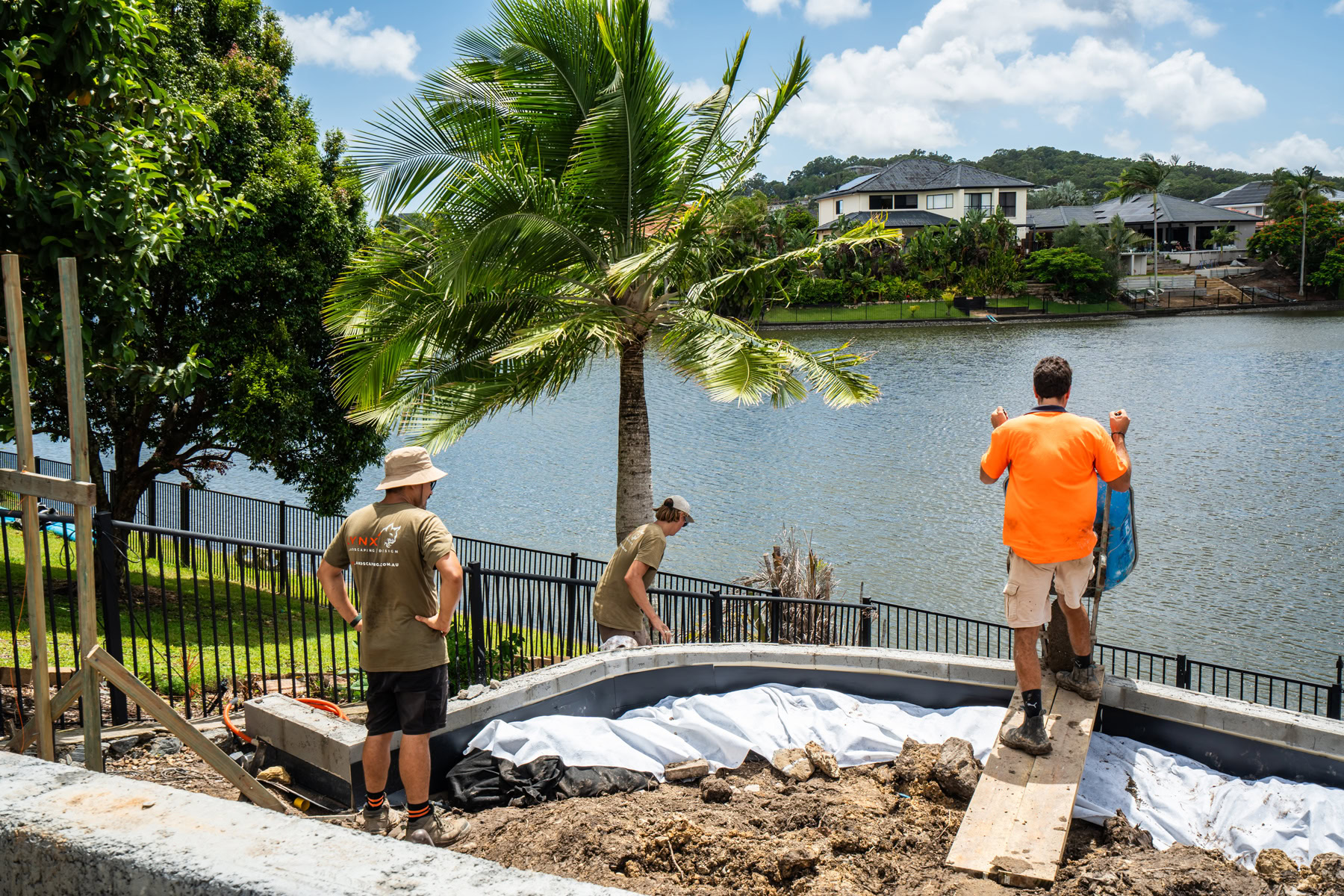
A strong example of this approach is the Dunlin project in Burleigh Waters, a $360,000 transformation completed over 15 weeks on a sloping 803sqm waterfront block. The site presented significant access and level challenges, with a heavily terraced backyard and no usable outdoor space at the outset.
Through careful planning and staged demolition, the team created access, resolved the level changes and delivered a custom swimming pool, curved feature block walls and glass-panel fencing, all designed to maintain openness to the water rather than enclose the site.
The removal of the rear boundary fence, made possible by the 1.2-metre level drop and compliance with pool safety requirements, allowed the pool outlook to remain completely open to the waterfront beyond.
By comparison, adding a pool after the surrounding landscape has already been designed or constructed can introduce duplicated works, mismatched levels and compromises to the finished layout that may be more difficult and expensive to resolve later.
What Determines the Cost of a Landscape Transformation?
Two projects that sound relatively similar at first can end up requiring very different budgets. The difference is not simply a matter of one landscaper charging more than another. It generally comes down to what is actually required to prepare, construct and finish each site.
The following factors tend to have the greatest influence on the overall investment.
Landscape Design and Documentation
Design is where many of the decisions that shape the finished landscape are resolved before construction begins.
Site assessment, concept development, layout, material selection, levels and construction detailing all help establish how the landscape will function and identify potential challenges early. The more complex the site and project, the more important this planning becomes.
Landscape design is generally quoted separately from construction, with the cost varying according to the level of documentation required.

Before detailed design work begins, Lynx Landscaping offers a $440 design consultation. This includes at least an hour on site with a sales estimator and landscape architect, giving homeowners the opportunity to walk through the property, discuss ideas and gain a clearer understanding of likely costs, practical considerations and the next steps.
Detailed 2D landscape design is around $6,500, or around $8,000 with 3D visualisation included, depending on the block and project requirements.
Site Preparation, Excavation and Access
A considerable amount of work can take place before any of the finished landscaping becomes visible.
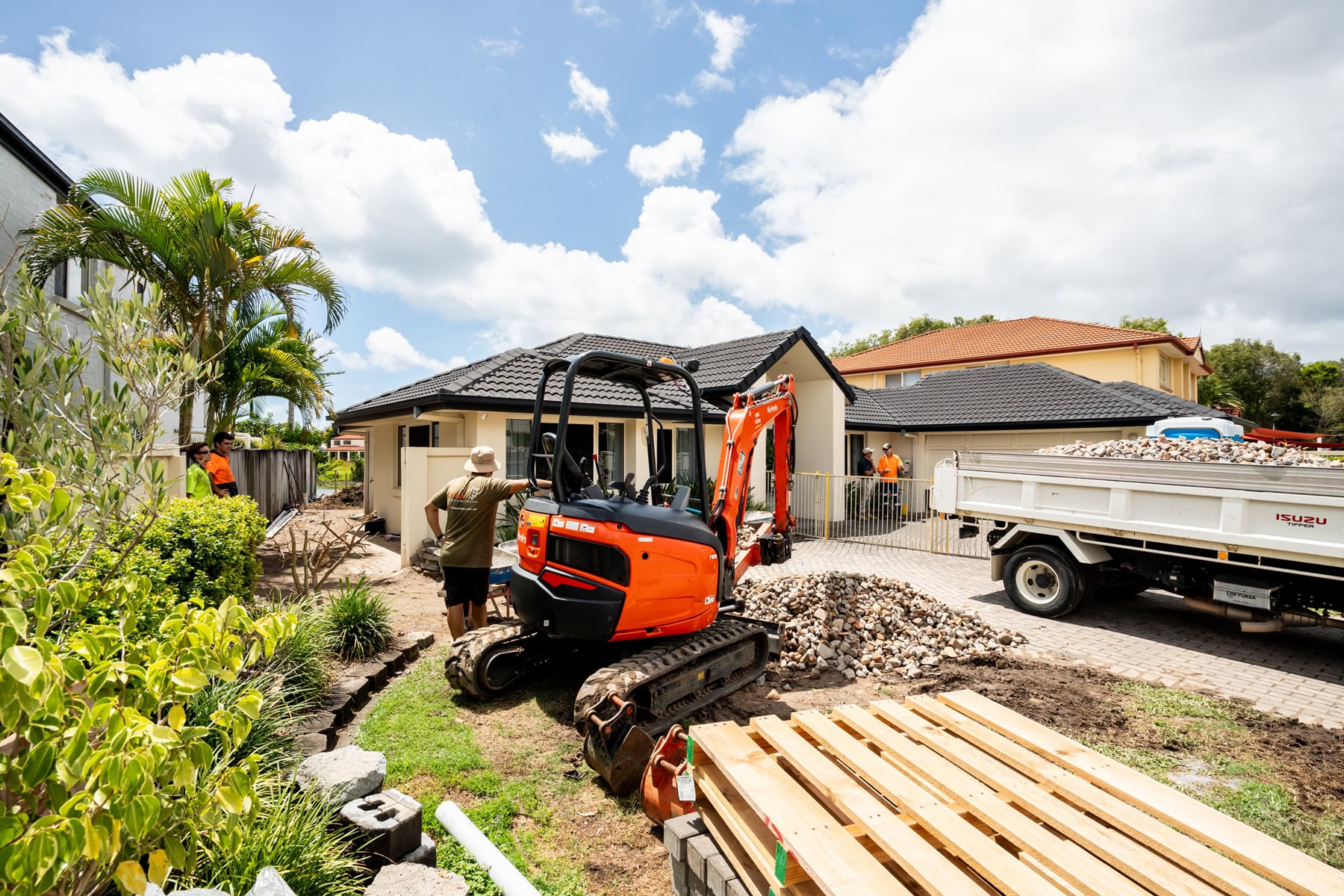
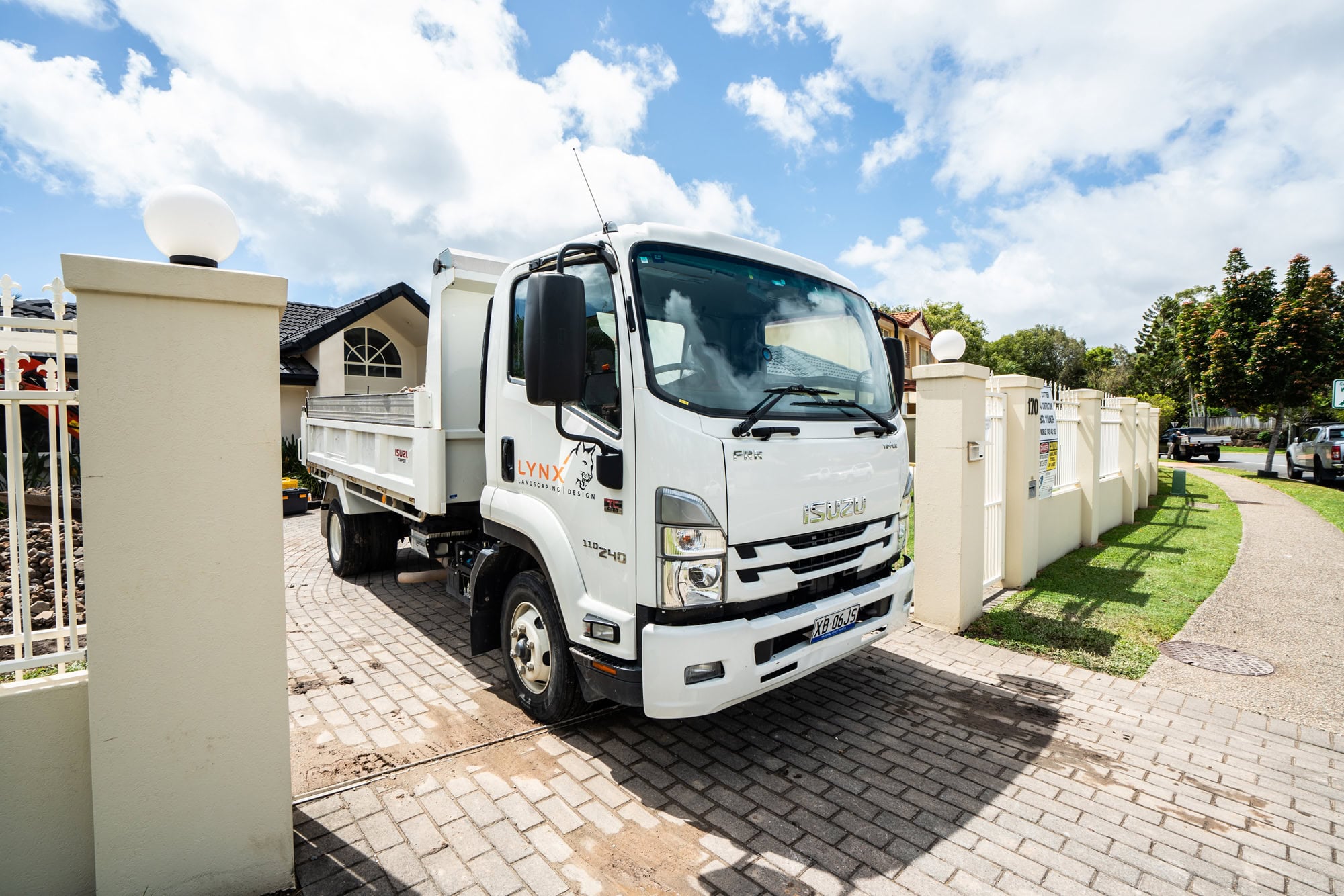
Existing structures or surfaces may need to be removed, levels altered and soil excavated or brought onto site. There is also the practical matter of moving machinery, materials and spoil in and out of the property.
Soil conditions, demolition requirements, spoil disposal and restricted access can all affect how efficiently the work can be carried out.
Difficult access does not necessarily prevent a project from proceeding, but it can change the construction methodology and increase the labour or equipment required to complete the work.
Slope, Retaining Walls and Structural Landscaping
Sloping sites are often among the more involved properties to landscape because substantial work may be required simply to create stable, usable areas.
Earthworks, retaining walls, level changes, stairs, footings and other structural elements can all add considerably to the construction scope. Depending on their height, position and construction method, retaining walls may also require engineering, approval or certification.
These requirements are best identified during the planning and design process so they can be incorporated into the project from the outset rather than treated as unexpected additions later.
Pools and Water Features
A custom concrete pool is one of the most significant individual additions to a landscaping project, but the cost extends well beyond the pool shell itself.
Excavation, engineering, filtration, coping, pool surrounds, compliant fencing and integration with the surrounding landscape all form part of the overall scope.
Because a pool affects so many other elements of the property, including access, levels, drainage and entertaining areas, it is best considered early in the design process rather than introduced once the rest of the landscape has already been resolved.

Paving, Decking and Outdoor Entertaining Areas
Hardscaping and outdoor entertaining areas can represent a significant portion of the project budget, particularly when they cover large areas or involve premium materials and custom construction.
The extent and type of paving, the preparation beneath it and the material selected all influence cost. The same applies to decking, outdoor kitchens, BBQ areas, pergolas, pavilions and other built structures.
A spotted gum deck, custom concrete BBQ bench with an integrated fridge or enclosed patio designed for year-round use can all add significantly to the overall scope depending on their size and specification.
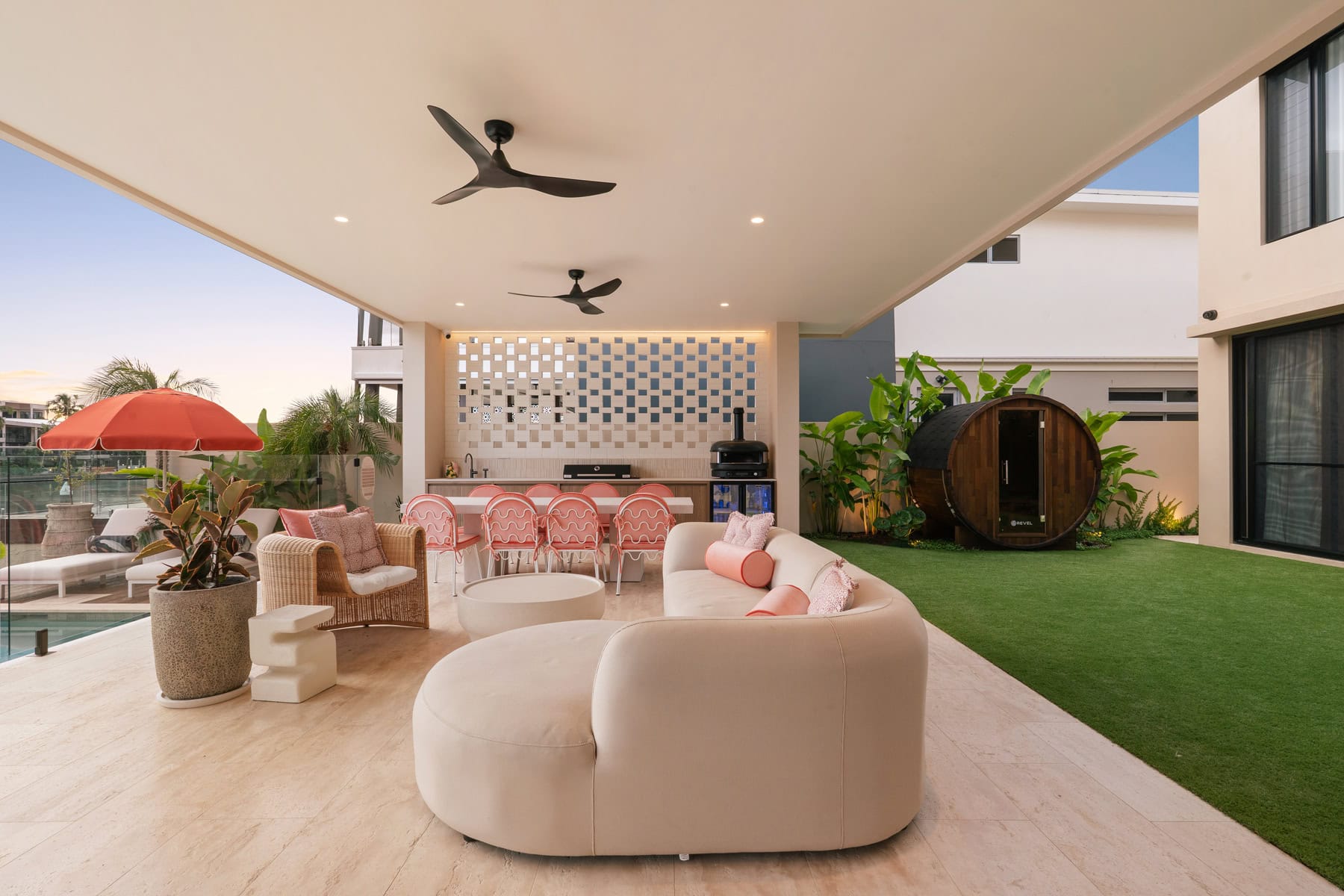
The Sovereign project in Mermaid Waters, a $145,000 build completed in four weeks, is a good example of a landscape where outdoor entertaining formed an important part of the overall transformation.

Planting, Turf and Soft Landscaping
Planting may be one of the softer elements visually, but it can still represent a substantial part of the landscape budget.
The number of plants required, species selection, plant maturity, specimen trees, soil preparation and the size of garden beds and turf areas can all influence the final cost.
Established feature trees, for example, can make an immediate contribution to the finished landscape but naturally come at a higher cost than younger planting.
Artificial turf is also not necessarily the cheaper alternative to natural lawn. In many projects, it is selected for practical reasons such as reduced maintenance, consistent presentation or lower ongoing water requirements.
Drainage, Irrigation and Lighting
Drainage, irrigation and lighting tend to attract less attention than pools, paving and planting, but they play an important role in how well the finished landscape performs over time.
Drainage and stormwater management help protect both landscaped and built areas, while irrigation supports healthy planting and landscape lighting improves usability and atmosphere after dark.
Planning this infrastructure before construction is completed also avoids the additional cost and disruption involved in trying to retrofit services through paving, garden beds or other finished surfaces later.
Material and Finish Selection
The level of specification can have a substantial impact on the final investment, even where two projects have almost identical layouts.
Natural stone and porcelain, custom detailing and more standard finishes, or premium fixtures and more conventional selections can all result in different price points.

Higher specification is not automatically necessary in every part of a landscape. Instead, material selection provides an opportunity to decide where premium finishes will have the greatest impact and where more cost-effective alternatives can achieve the desired result without compromising the overall design.
Why Can Two Similar-Sized Properties Cost Completely Different Amounts?
Consider two Gold Coast homes with approximately the same amount of outdoor space.
Property A is flat and has straightforward machinery access, minimal demolition, limited retaining, standard paving and a relatively simple planting scheme. Very little preparation is required before construction can begin.
Property B is on a sloping site with restricted access. Significant excavation and retaining are required before the main landscaping can commence, and the project also includes a custom concrete pool, extensive natural stone paving, an outdoor entertaining structure, integrated lighting and mature planting.
Although the two properties may be similar in size, the amount of labour, materials, engineering, machinery and coordination involved is very different.
This is why a simple cost-per-square-metre figure rarely provides a meaningful indication of what a complete landscape transformation will cost.
How to Set a Realistic Landscaping Budget
One of the most useful things a homeowner can do before approaching a landscape designer is to think carefully about their priorities and be open about the budget available.
Budget should not be treated as an awkward conversation to have once the plans are complete. It is one of the pieces of information that allows a landscape to be designed realistically from the beginning.
A clear understanding of the investment available helps determine where the greatest value can be created, which elements are essential and where the design may need to be adjusted to keep the overall project achievable.
Design to the Budget From the Beginning
A concept that significantly exceeds the available construction budget can lead to unnecessary redesign, delays and disappointment.
When the budget is understood from the outset, the designer can make informed choices around scope, materials and priorities as the plan develops.
This is one of the key advantages of a design-led approach. The objective is not simply to create a landscape that looks impressive on paper, but to develop a considered plan that can realistically progress through to construction.
Prioritise Where the Investment Matters Most
Structural and site requirements generally need to come first, as every other part of the landscape depends on them and they are often the most difficult elements to change once construction is complete.
From there, priority can be given to the areas that will have the greatest impact on how the property is used, such as a pool, outdoor entertaining area or deck that forms part of everyday family life.
Material selections can then be considered strategically. Premium finishes may make sense in highly visible or frequently used areas, while other parts of the project can often be simplified without compromising the overall result.
When the wish list begins to exceed the budget, adjusting the size of an area or selecting a quality porcelain tile in place of a premium natural stone, for example, can be a more sensible approach than cutting back on the structural work or preparation that supports the entire project.
What Should Be Included in a Landscaping Quote?
The headline figure is only one part of a landscaping quote. To understand what is actually being provided and compare proposals properly, it is important to look closely at the detail behind the number.
A comprehensive quote should clearly address:
- Scope of works, with the individual components of the project properly defined rather than described in broad terms.
- Materials and specifications, including the products, finishes and allowances included.
- Site works, such as excavation, demolition, access requirements and disposal.
- Inclusions and exclusions, so there is a clear understanding of what has and has not been allowed for.
- Pool and structural components, where these form part of the project.
- Project management, including the coordination required to deliver the work as one cohesive project.
- Timeline and process, providing clarity around the expected sequence of works and how the project will progress.

It is also worthwhile understanding how likely site issues have been accounted for.
Where common site requirements can reasonably be anticipated, Lynx Landscaping incorporates the relevant scope and allowances during quoting and planning. Details such as these can sometimes be absent from a lower or less comprehensive quote, only to emerge later as variations once work is underway.
Why the Cheapest Landscaping Quote Can Cost More in the Long Run
A lower quote does not always represent the same scope of work at a better price.
Differences in site preparation, drainage, material allowances, specifications and exclusions can make two headline totals appear comparable when the underlying proposals are very different.
Costs that have not been properly accounted for at the outset may later appear as variations, rectification work or additional coordination between separate trades.
For that reason, the most useful comparison is not simply which quote is lowest, but what has actually been included, the quality of the proposed materials and construction, and how comprehensively the project has been planned.
How Can You Keep a Landscape Transformation Within Budget?
Keeping a substantial landscape project within budget is generally less about finding the cheapest option and more about making informed decisions early.
A few practical principles can make a significant difference:
- Set a realistic budget before the design is developed, rather than trying to make the finished design fit a number afterwards.
- Design the property as a whole, even if construction will ultimately be completed in stages.
- Plan the pool and surrounding landscaping together from the beginning.
- Resolve the scope as thoroughly as possible before construction starts.
- Prioritise structural requirements and high-use areas, then simplify less critical elements where necessary.
Good planning does not remove every possibility of an unforeseen cost, but it greatly reduces the number of expensive decisions that need to be made once construction is already underway.
Planning a Full Landscape Transformation on the Gold Coast?
Realistic budgeting starts with understanding the property, the project priorities and the complete scope of work rather than relying on a generic cost-per-square-metre figure.
A design-led process allows those considerations to be worked through before construction begins, creating a plan that responds to both the site and the available budget.
With in-house landscape design and complete construction capability, Lynx Landscaping can manage the project from initial concept through to completion as one coordinated job.
For a complete landscape transformation on the Gold Coast or Northern NSW, speak with the Lynx Landscaping team about your property, priorities and budget.
Call 0491 303 867 or complete the online enquiry form.
Frequently Asked Questions:
Should I tell my landscape designer my budget?
Yes. A realistic budget gives the landscape designer useful parameters to work within and helps ensure the design aligns with what can actually be constructed.
Without that information, there is a greater risk of developing a concept that later needs to be significantly revised. Being open about the budget from the beginning allows features, materials and scope to be prioritised more effectively.
Can I complete a full landscape transformation in stages?
Often, yes. Staging can be a practical way to spread the investment over time, particularly on larger or more complex properties.
However, it is still advisable to plan the property as a whole before the first stage begins. Levels, drainage, services, retaining, access and the location of a future pool can all be affected by earlier works. An overarching design helps ensure each stage supports what will come next.
Is it cheaper to build the pool first and landscape later?
Not necessarily.
Treating the pool and landscaping as completely separate projects can lead to duplicated excavation, access difficulties, mismatched levels or compromises around the pool surrounds.
If a pool forms part of the long-term plan, considering it as part of the overall landscape design gives the different elements a better chance of working together and can help avoid unnecessary rework later.
How much should I allow for landscaping when building a new home?
There is no reliable percentage that applies to landscaping for a new build.
A flat block requiring relatively straightforward landscaping will have very different requirements from a sloping property with retaining, a swimming pool and substantial outdoor entertaining areas.
The important step is to include landscaping within the overall project budget early so that levels, drainage, retaining, pool construction and outdoor areas can be planned alongside the home rather than addressed once the build is almost complete.
Does landscaping add value to a property?
Professionally designed landscaping can improve the presentation, functionality and usability of a property, as well as its appeal to future buyers.
This can be particularly relevant on the Gold Coast, where outdoor entertaining and pool areas often form an important part of how a home is used. However, the financial return will vary between properties and should not be treated as guaranteed.
Do I need council approval for a major landscaping project?
It depends on the type of work being undertaken.
Swimming pools, certain retaining walls, built structures and other elements may require approvals, engineering or certification depending on their design and location.
These requirements should be considered during the planning stage so the necessary approvals and professional input can be coordinated as part of the wider project.