

A concrete pool can usually be renovated rather than replaced, because the interior finish, tiles, coping and equipment wear out long before a sound concrete shell does. A renovation can range from a fresh interior and new waterline tiles through to new coping, modern equipment and added features such as heating, lighting or in-pool seating, on the Gold Coast QLD and in Northern NSW.
Why concrete pools are worth renovating
A concrete shell is built to last. The interior can be resurfaced, tiles and coping can be replaced, and the shell can often be reshaped in ways a one-piece pool cannot. That is a key reason we build concrete pools, and why we renovate them too. Where the shell and plumbing are sound, renovating is usually a smaller job than starting again. Many Gold Coast QLD and Northern NSW homes still have concrete pools from the 1980s and 1990s, with a sound shell but a tired finish.
Signs your concrete pool needs a renovation
Use this as a checklist, not a diagnosis.
- The surface feels rough, scratchy or chalky underfoot, or has etched or pitted patches.
- Stains or discolouring come back after cleaning.
- The surface is flaking or peeling, or sounds hollow when you tap it (often called "drummy").
- Waterline tiles are cracked, loose, missing, or crusted with white calcium deposits.
- Coping is cracked, loose, lifting, or no longer safe to walk on barefoot.
- Rust spots coming through the surface can mean the reinforcing steel inside the shell needs a professional check.
- The water level keeps dropping, which can point to a leak.
- The equipment is old, noisy, uses a lot of power, or keeps breaking down.
If any of these sound familiar, start with an inspection. That check comes before we recommend a finish, or a renovation is compared with a new pool.
How Gold Coast and Northern NSW conditions wear a pool
Coastal pools work hard. Strong sun over a long swimming season fades colours and ages surfaces and sealants. In both salt and chlorine pools, water that is out of balance — when the pH (how acidic or alkaline the water is), alkalinity or calcium hardness is off — can eat into cement-based finishes or leave scale on tiles. Salt pools are common here, so the finish and fittings should suit a salt pool. Salt in the air can corrode exposed metal such as ladders, rails and fittings, and heavy rain can dilute the water, so the balance is worth checking after a downpour.
What a concrete pool renovation can include
Inspection first
We inspect the shell, the existing surface, the tiles, the coping and the fittings, and whether the pool is losing water, before any new finish is chosen. If the shell is not structurally sound, a rebuild or a new custom concrete pool may be the better option.
Resurfacing the interior
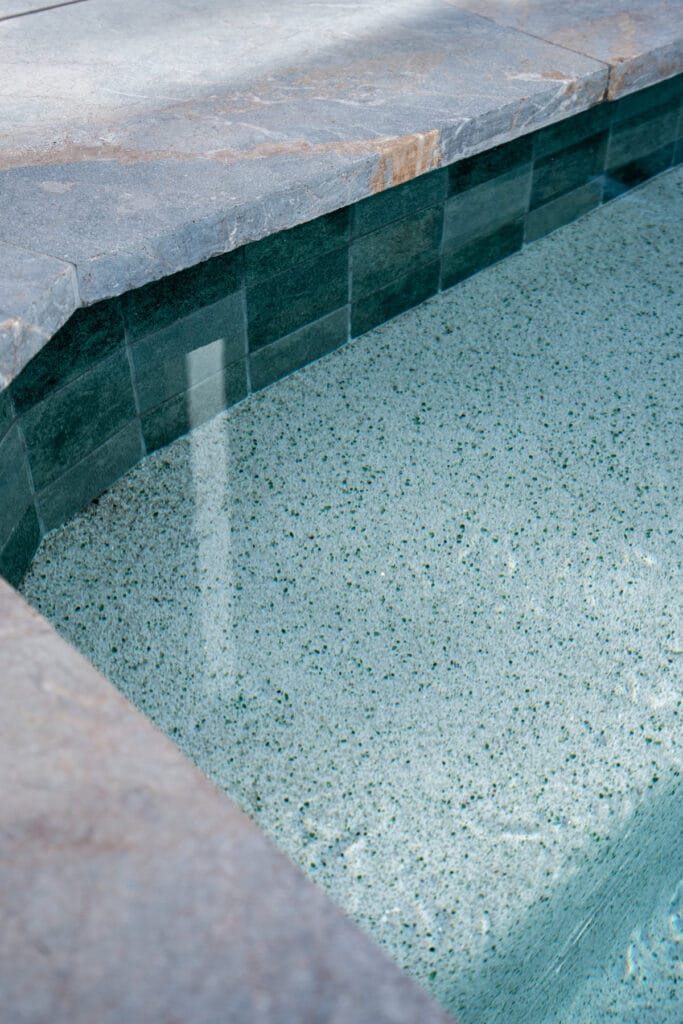
The old surface is removed back to sound material and a new finish is applied. For renovations, Lynx finishes the interior with Pebblecrete or tiling. Pebblecrete is a cement finish with small pebbles set in the surface, then washed back so the stones show. It has a natural, slightly textured feel underfoot, and the pebble colour changes the colour of the water. A fully tiled interior is the other option. For a closer comparison, see our guide to choosing the right finish for your concrete pool.
Retiling: waterline and full tiling
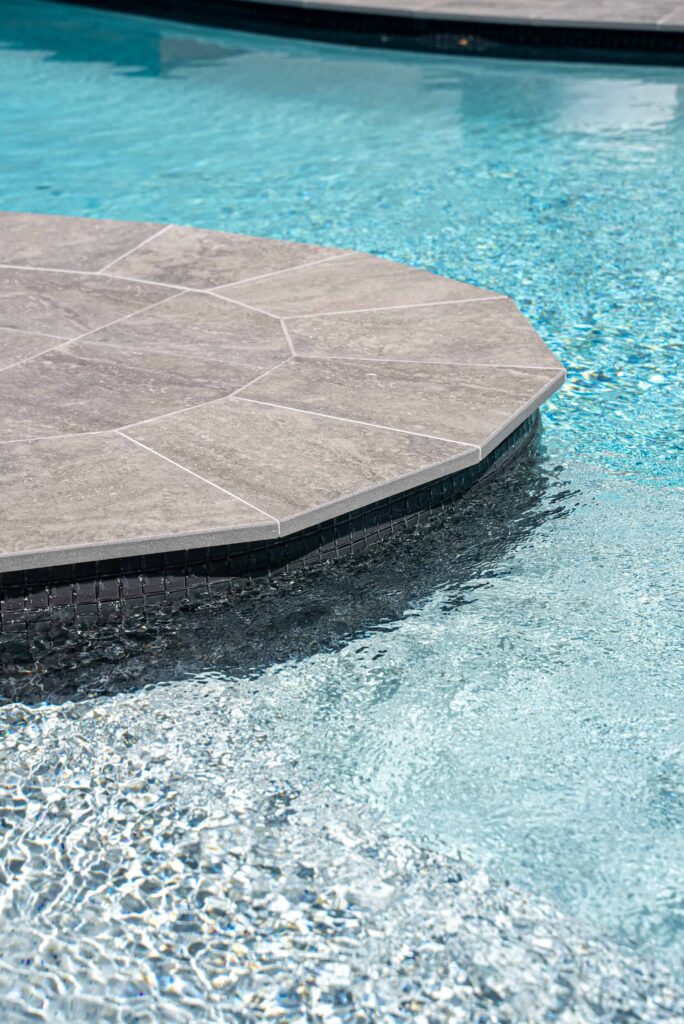
Waterline tiles take the most wear from calcium build-up and the sun, and replacing that band alone can refresh a pool. A fully tiled interior is the premium option, and needs a specialist tiler and careful waterproofing and grout. Mosaic or feature tiles can add detail on steps, benches or the waterline. When the pool is already empty, the waterline tiles and the interior can be worked on together.
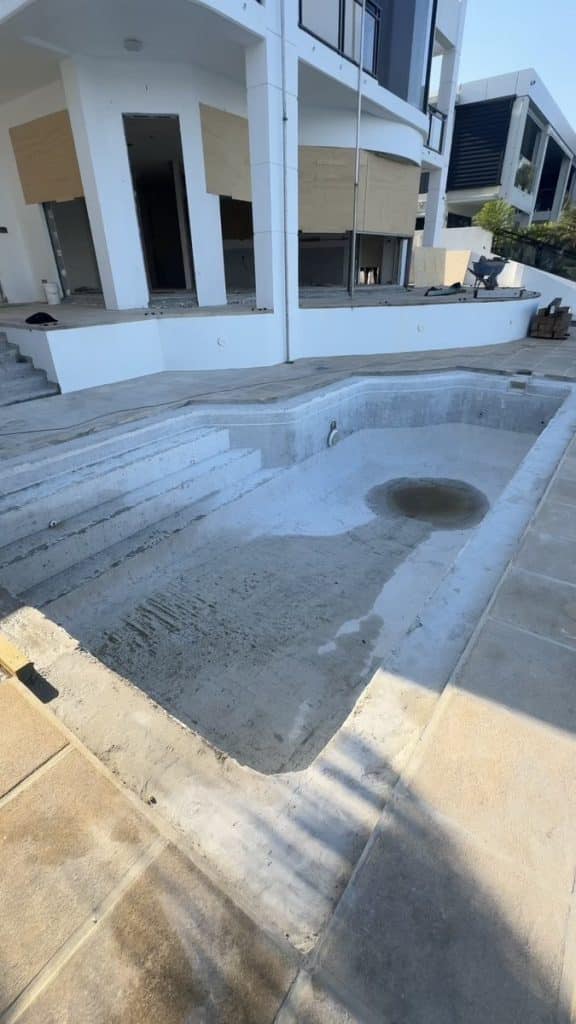
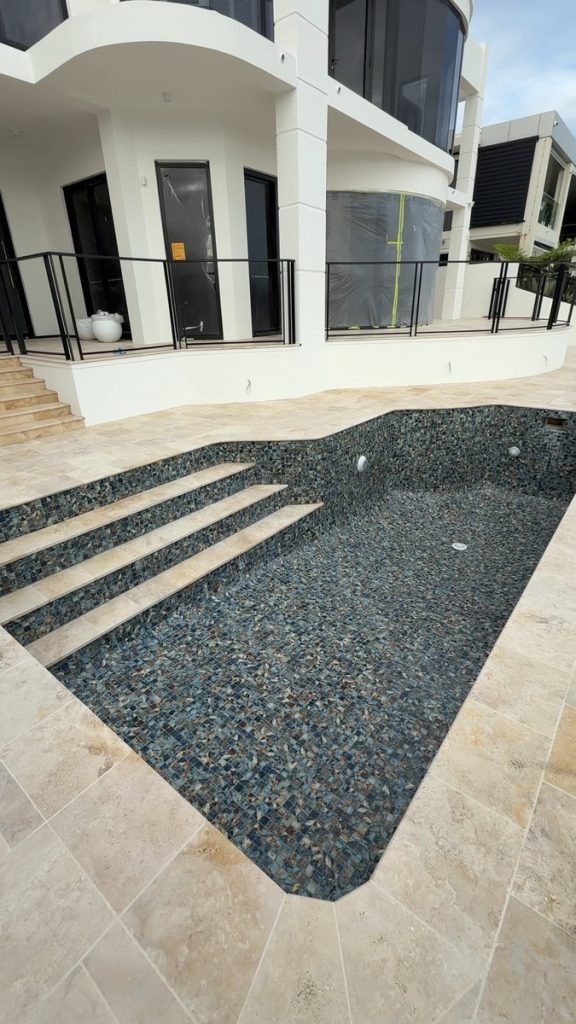
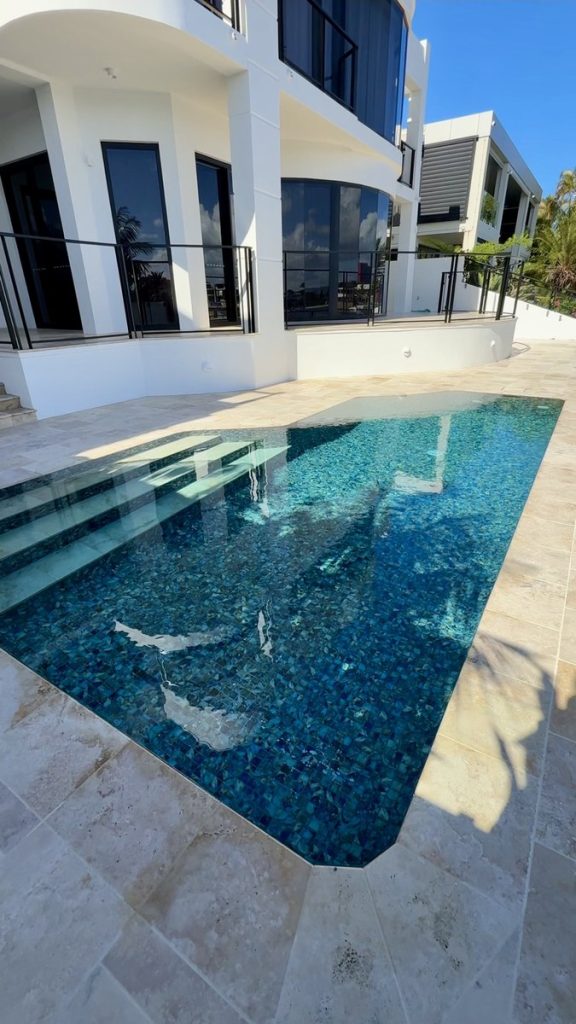
A Lynx pool renovation: stripped back, retiled in glass mosaic, and finished
New coping
Coping is what people sit on and walk past, so it needs to be safe and comfortable when wet. Common choices are natural stone (such as travertine or limestone), porcelain, or concrete. Look for a slip-resistant surface that does not get too hot underfoot in summer, and choose it together with the waterline tile, the interior finish and the paving around the pool. For more on the space around the pool, see our page on pool landscaping and surrounds.
Equipment upgrades
Pumps, filters and chlorinators can be replaced with newer models. Variable-speed pumps can run at lower speeds and generally use less power than older single-speed pumps. Automation lets you control the filtering, lights and heating from a panel or a phone.
Adding features
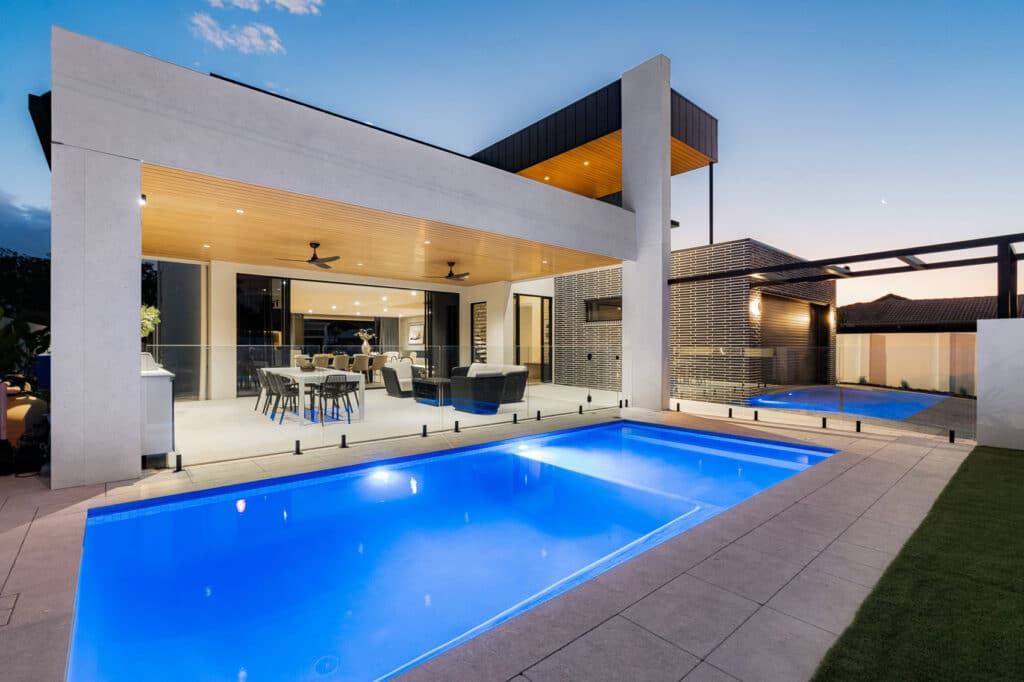
A renovation is often the right moment to add features the pool was not built with, including heating (a heat pump or solar), LED lighting, and water features such as blade spouts or a feature wall. In-pool seating — a bench, a ledge or a shallow sun shelf — or a spa may be possible, depending on the shell, the site and the structure. We work this out at the inspection and design stage.
The surrounds: a renovation that lifts the whole backyard
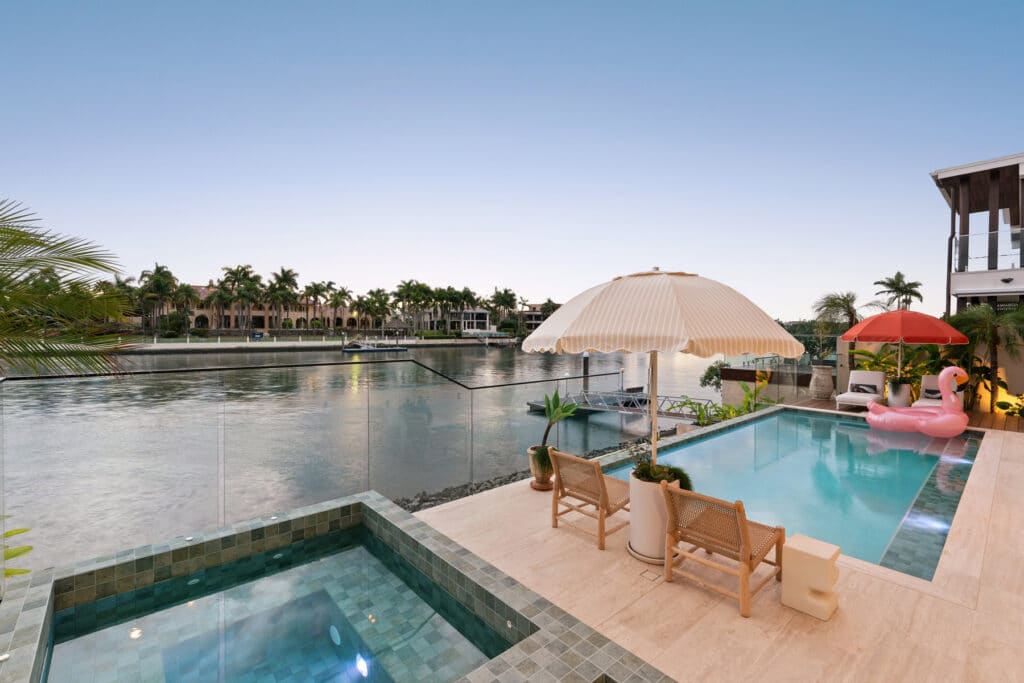
New paving, decking, planting, lighting, shade and fencing can be planned at the same time as the pool works. Our licensed landscape architects and landscape designers design the pool and the backyard together. Every design includes a 2D plan, and a 3D model is optional. Design takes up to six weeks, and the same team then builds the pool works and the landscaping. Any fence work must meet current pool safety rules in Queensland and New South Wales. Lynx handles pool fence certification.
How a Lynx pool renovation works
- Inspection and talk-through. We look at what the pool needs, and what you would like from it.
- Design, if it is needed. The pool and surrounds are planned together, with a 2D plan included and 3D optional, and this takes up to six weeks.
- Approvals, if the work needs them. Lynx organises these before works start. Council approvals usually take 4 to 8 weeks.
- Works. The pool is drained and prepared, then retiled, re-coped and resurfaced, with equipment and features fitted as agreed. On-site works typically take around two weeks, depending on the site.
- Curing, refilling and handover. The new surface is cured, the pool is refilled and balanced, and we hand it over with care tips.
When a new pool makes more sense
If the shell has major structural problems, or the pool’s size, shape or position no longer suits the home, a new custom concrete pool may be better value than a renovation. New custom concrete pools start from $60,000. A new pool build typically takes 8 to 12 weeks, plus design and council approvals (organised by Lynx). We also build custom concrete pools on the Gold Coast and in Northern NSW.
Thinking about renovating your pool?
Lynx renovates concrete pools across the Gold Coast QLD and Northern NSW, from a new finish to a full pool and backyard makeover. The next step is to book a pool inspection or talk to our team. We are licensed for this work in Queensland (QLD Licence 15338177) and New South Wales (NSW Licence 489729C).