
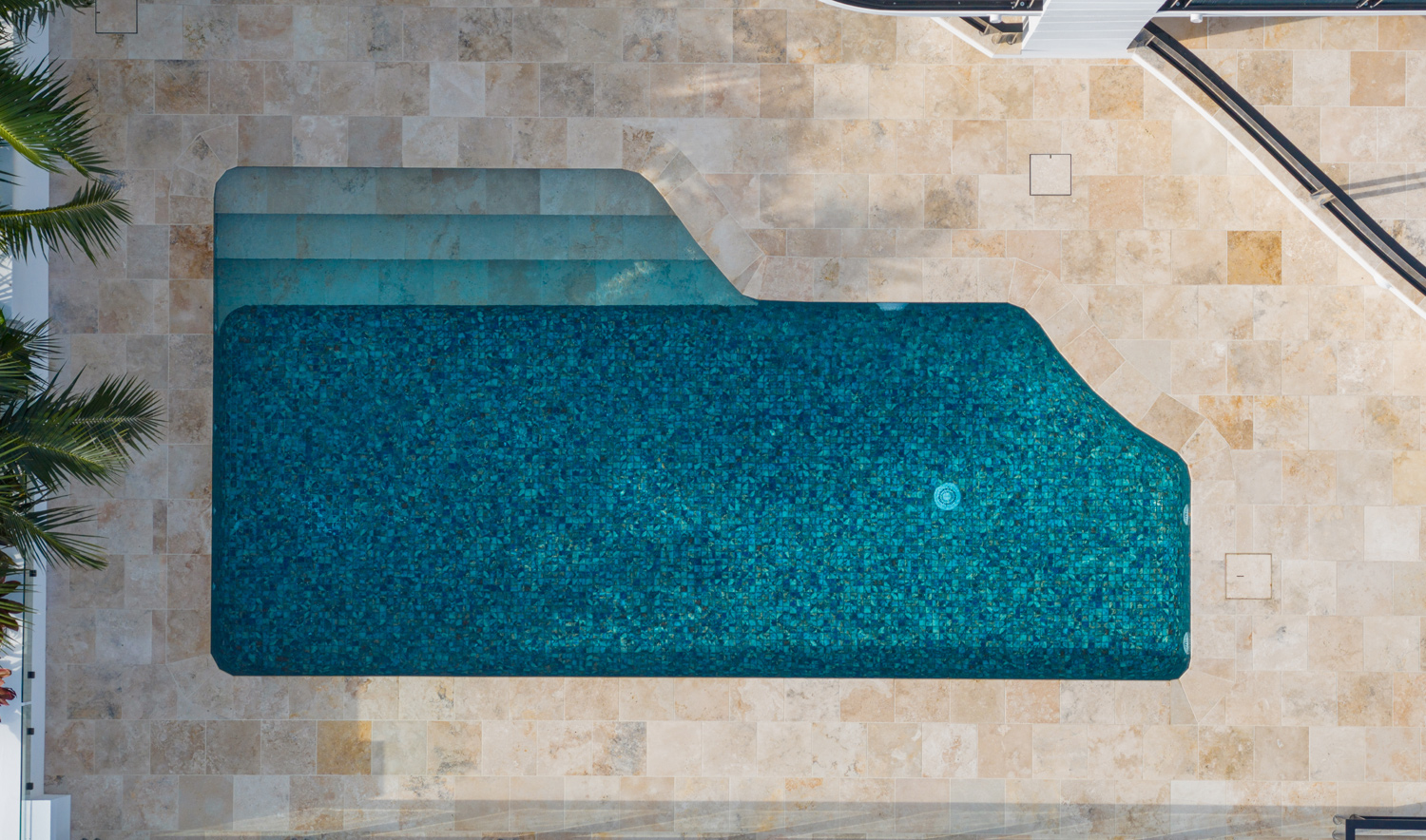
Choosing your pool’s interior finish is where function meets beauty. It’s the final layer that defines how the water shimmers, how the surface feels underfoot and how effortlessly the whole space ties together. Your pool’s interior finish is a big decision and not one that’s easily reversed. Once it’s installed, it becomes the foundation of your pool’s personality, affecting how it looks, how it feels and how it weathers the years ahead.
The right choice can turn a plain concrete shell into a stunning escape, while the wrong one can leave you dealing with costly upkeep or wishing you’d chosen differently. Whether you’re drawn to the organic textures of exposed aggregate or the luxe polish of tile, the finish shapes your pool’s mood, maintenance and longevity – and it all starts with the right advice.
At Lynx Landscaping, we have experience with a wide range of high-quality pool finishes. Our role is to help you make the right decision based on your vision, lifestyle and budget.

Key Takeaways
- Your pool’s finish affects texture, colour, comfort and how much cleaning it needs
- Options range from cost-effective paints to premium tile or glass bead finishes
- Longevity and durability differ between finishes
- Some finishes are smoother underfoot, others more tactile and natural
- Lynx Landscaping can help you weigh the pros and cons of each material
Planning a pool that looks amazing and lasts for years? Enquire online or call 0491 303 867 to speak with the experts at Lynx Landscaping and get personalised recommendations for your perfect pool finish.
Types of Concrete Pool Finishes:
Pebblecrete / Exposed Aggregate
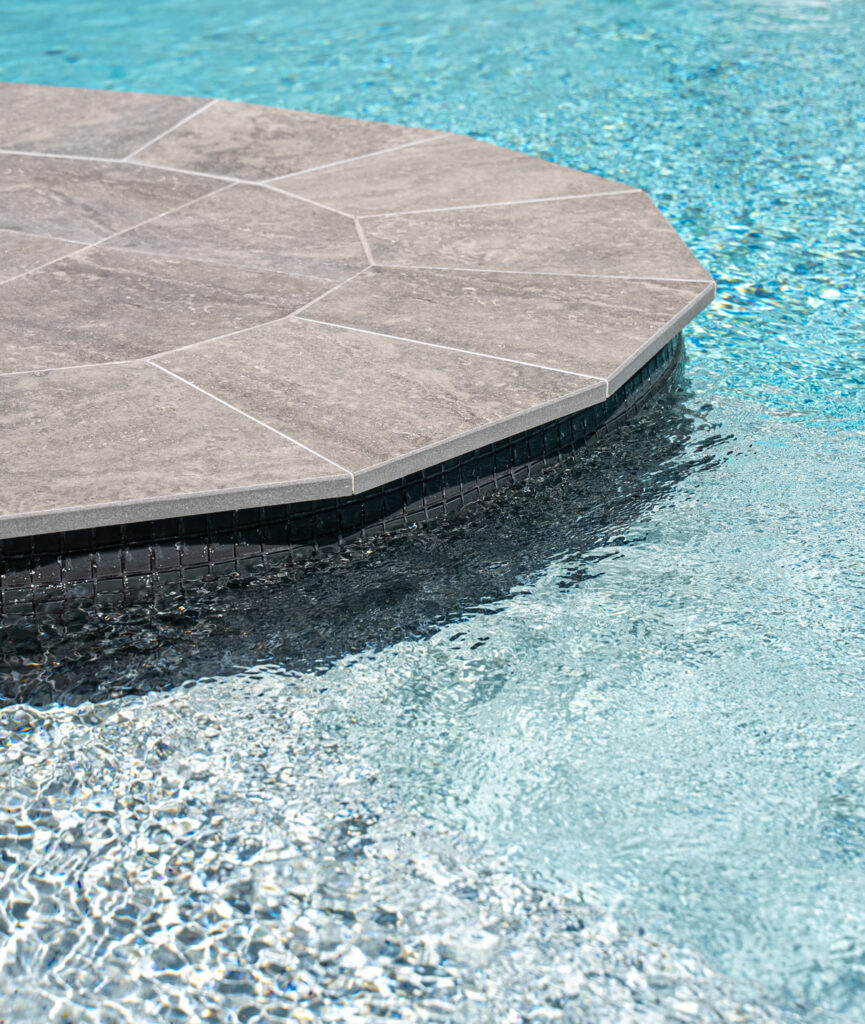
Pebblecrete is a mix of pebbles and cement applied by hand or sprayed onto the surface, then washed back to expose the stones. It creates a natural, beachy look with a tactile surface that blends beautifully into outdoor settings.
It’s one of the most durable options, lasting 15–20+ years with minimal upkeep.
Pros
- Very durable and long-lasting in Australian conditions
- Great grip underfoot, ideal for kids and active swimmers
- Comes in a wide variety of colours and aggregate sizes
Cons
- Can feel rough or scratchy, especially for young children
- The textured surface can trap algae if not maintained
Ideal for: Natural-style pools, tropical landscaping or modern outdoor areas that favour earthy tones and tactile finishes.
Glass Bead / Jewelled Aggregate
Glass bead finishes use the same method as pebblecrete, but with smooth glass beads mixed in. The result is a surface that sparkles in the sun and reflects light across the water.
It still delivers long-lasting performance for up to 15 to 20+ years but with a more premium feel.
Pros
- Creates a shimmering, luxury aesthetic
- Smoother underfoot compared to traditional pebble finishes
- Light-reflective quality enhances colour and water clarity
Cons
- More expensive than standard pebblecrete
- Still slightly textured, though less than raw pebble
Ideal for: Clients wanting a refined, high-end look without the cost of full tiling.
Quartzon / Polished Render
This finish combines quartz, marble and coloured cement to produce a smooth and vibrant interior. Unlike aggregate-based finishes, Quartzon is polished to deliver a sleek, consistent texture.
It looks clean and modern, with bold colours that suit a design-led pool. Longevity is 8–15 years, depending on water balance and surface care.
Pros
- Soft underfoot and smooth to the touch
- Easy to clean compared to textured surfaces
- Available in strong colour options for statement designs
Cons
- May fade or develop uneven tones over time
- Can be less forgiving of application errors
Ideal for: Modern pools where style, comfort and bold design are key.
Fully Tiled (Glass or Ceramic)
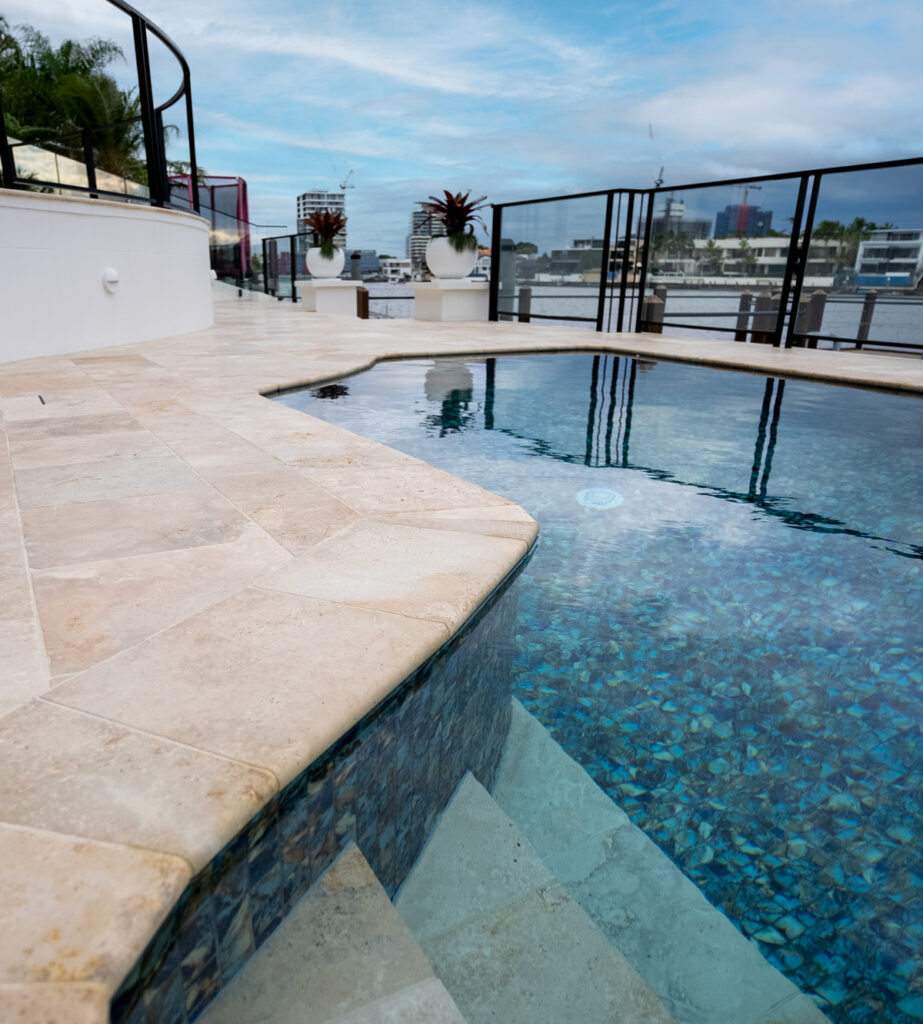
Fully tiling your concrete pool delivers a sleek, spa-like finish that’s smooth, vibrant and built to last. Small glass or ceramic tiles (usually 20mm–100mm) are installed by hand across the entire pool interior.
This is the longest-lasting finish up to 20 to 30+ years and the most luxurious in terms of both appearance and experience.
Pros
- Ultra-smooth and comfortable underfoot
- Colour stays vibrant over time
- Easy to maintain and clean
- Exceptional lifespan with proper installation
Cons
- Being a premium finish, this option has a higher cost
- Installation is slower and more labour intensive
Ideal for: Premium home builds, designer pools and luxury renovations.
Painted Finish (Epoxy or Rubber-Based)
A painted pool finish involves applying epoxy or rubber-based pool paint directly to the concrete surface. It’s a simple and affordable option, often used for resurfacing older pools.
This is a short-term solution, with a lifespan of just 2–5 years before recoating is needed.
Pros
- Lowest upfront cost
- Good for temporary refreshes or short-term upgrades
Cons
- Requires frequent maintenance and reapplication
- Prone to peeling, blistering or fading
Ideal for: Budget-conscious owners or temporary upgrades before a more permanent renovation.
How to Choose the Right Finish
The best interior finish for your pool depends on your priorities, not just design preferences, but also durability and upkeep. Here’s what to keep in mind:
Budget: Painted finishes are cheapest, while tiles are a premium option with a higher initial cost.
Aesthetic goals: Do you want a natural look or something sleek and high-end? Also, consider how your choice will tie in with your pool surrounds.
Texture: Think about whether you prefer smooth tiles, polished render or tactile pebble.
Maintenance: Some finishes are easier to clean and resist algae growth.
Longevity: If you want a set-and-forget solution, durability matters.
At Lynx Landscaping, we take the time to talk you through every finish option. Our team has experience designing and constructing custom concrete pools across the Gold Coast, using quality materials to bring your vision to life.
Bringing It All Together
There’s a lot riding on your choice of pool finish. It’s not something you can easily change later, and the cost of getting it wrong adds up fast. That’s why it’s so important to understand the different options, how they feel, how they wear and what kind of maintenance they need. The more you know before making the call, the better. And if you’re unsure, speak with someone who’s worked with these materials before. The right advice at this stage can save you years of frustration down the track.
Whether you love the shimmer of glass bead, the comfort of Quartzon or the timeless elegance of full tiling, we can help you make the right choice.
Building a new concrete pool or resurfacing an old one? Contact us or call 0491 303 867 to speak with the team at Lynx Landscaping.