
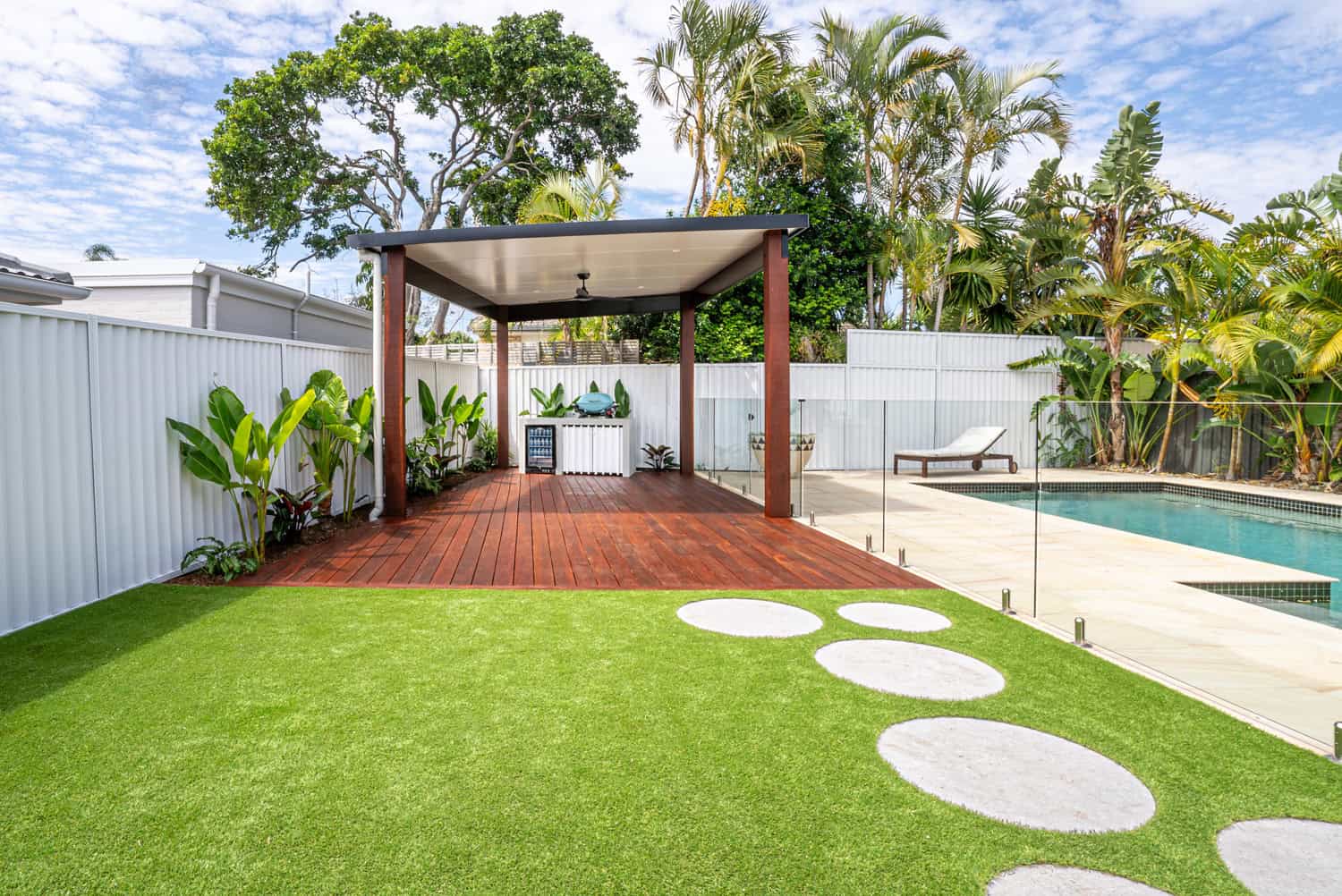
On the Gold Coast, outdoor areas are often where family life, entertaining, and everyday living naturally come together. A well-designed pergola or covered entertaining area does more than provide shade. It creates a comfortable, functional extension of the home that can be enjoyed throughout the year.
This guide covers what homeowners across the Gold Coast and Northern NSW should know before building, including the difference between pergolas and pavilions, material selection for coastal conditions, common design mistakes, project costs, and what to expect from a design-to-build process.
Key Takeaways
- Covered structures extend usable living space and enable all-season entertaining.
- Pergolas offer partial shade and architectural framing; pavilions provide full protection and function as outdoor rooms.
- Sun orientation, scale, and material selection must be resolved before construction begins.
- The best results come from integrating pergolas and pavilions into the broader landscape design from the outset.
- Lynx Landscaping manages everything from concept and design through to construction and landscape finishing.
Pergola vs Pavilion: Which Is Right for You?
Both are excellent options. The right choice depends on how the space will actually be used.
| Pergola | Pavilion | |
|---|---|---|
| Roof Type | Open/slatted/louvred | Fully enclosed |
| Shade | Partial | Full |
| Rain Protection | Minimal | Excellent |
| Airflow | Excellent | Good |
| Best For | Garden framing, patios, and plant support | Outdoor rooms, kitchens, and alfresco dining |
| Maintenance | Low to moderate | Low (sealed roof) |
| Relative Cost | Lower | Higher |
Many homeowners combine both: a pergola to frame the garden and define the indoor-outdoor transition, and a pavilion anchoring the main entertaining zone.
Pergolas: Light, Air, and Architectural Character
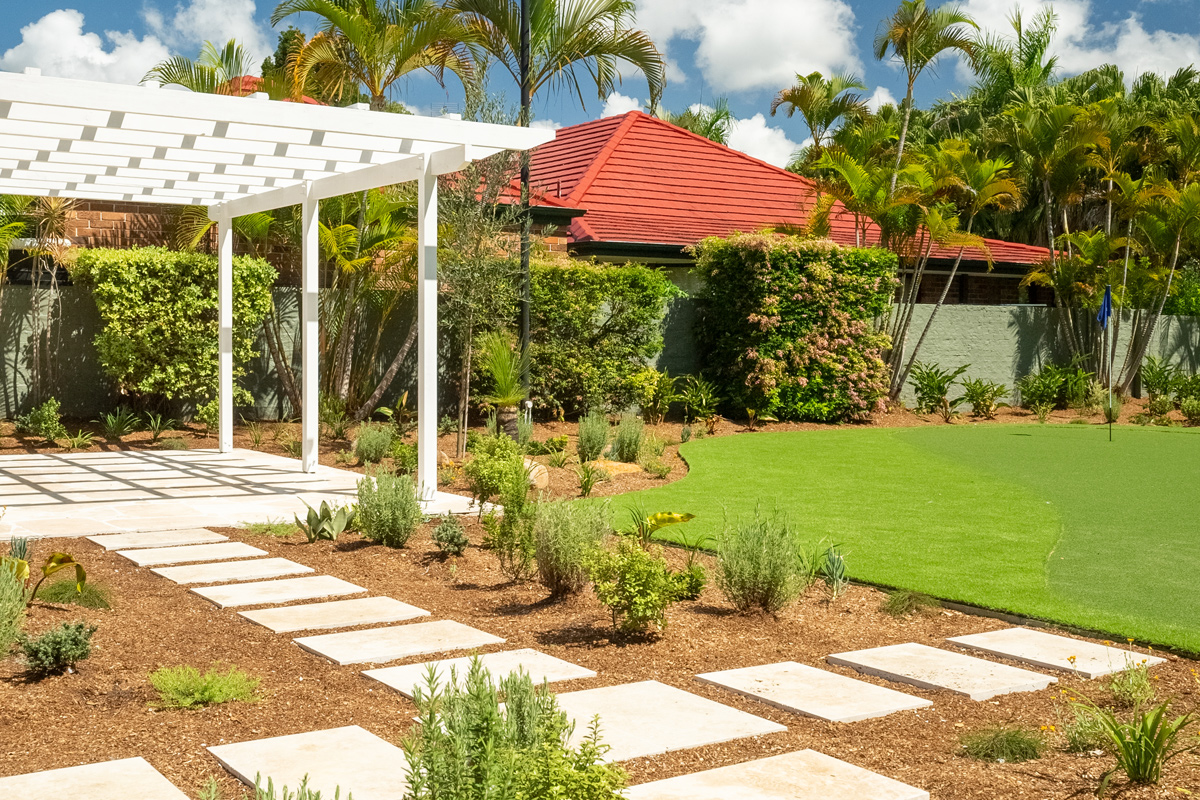
A pergola is a framework of vertical posts and open or slatted horizontal beams. It defines a space, creates a sense of enclosure without boxing you in, and gives a backyard the architectural structure it would otherwise lack.
In practice, a well-positioned pergola becomes the element around which everything else organises.
What Makes a Pergola Work
- Partial shade with excellent airflow – well suited to Queensland summers
- Adjustable louvred panels allow light control throughout the day
- Excellent support for climbing plants and vines, producing a softer, more natural canopy than any manufactured shade system
- Integrated exterior lighting transforms the space after dark
- Ceiling fans extend comfortable use well into warm evenings
Material Options
Material choice defines the finished character.
- Treated hardwood or spotted gum: warm and natural, suits Queensland-style and contemporary tropical architecture
- Powder-coated steel or aluminium: clean and modern, popular across newer estates in Coomera, Hope Island, and the southern Gold Coast
- Timber-look aluminium: low-maintenance and well-suited to coastal properties where salt air accelerates wear
Pavilions: All-Season Outdoor Rooms
Gold Coast summers bring both intense heat and sudden afternoon storms. Without a solid roof, even a beautifully designed alfresco area becomes unusable at exactly the times you want to use it most.
A pavilion solves that. With full overhead coverage, it performs in any weather.

The Outdoor Room
A well-designed pavilion often becomes the part of the home everyone gravitates toward.
With the right layout, it functions as:
- an outdoor dining zone for all-season entertaining
- a poolside retreat with direct water access
- a covered alfresco kitchen with integrated BBQ and fireplace
- a family lounge that extends the home without a building extension
Materials and Finishes
- Colorbond steel roofing: durable and salt-air resistant, well proven in coastal conditions
- Timber-framed with polycarbonate or tiled roofing: warmer aesthetic, traditional appeal
- Full concrete tile with concealed steel structure: architecturally consistent with the main residence
The best pavilions do not look like additions. They look as though they were always part of the home.
Year-Round Usability
Ceiling fans, outdoor heaters, and retractable cafe blinds or motorised screens extend comfortable use through summer evenings and the occasional cooler winter night. A well-specified pavilion can add significant functional and resale value to any property.
Project Example: Broadbeach Waters Canal Home
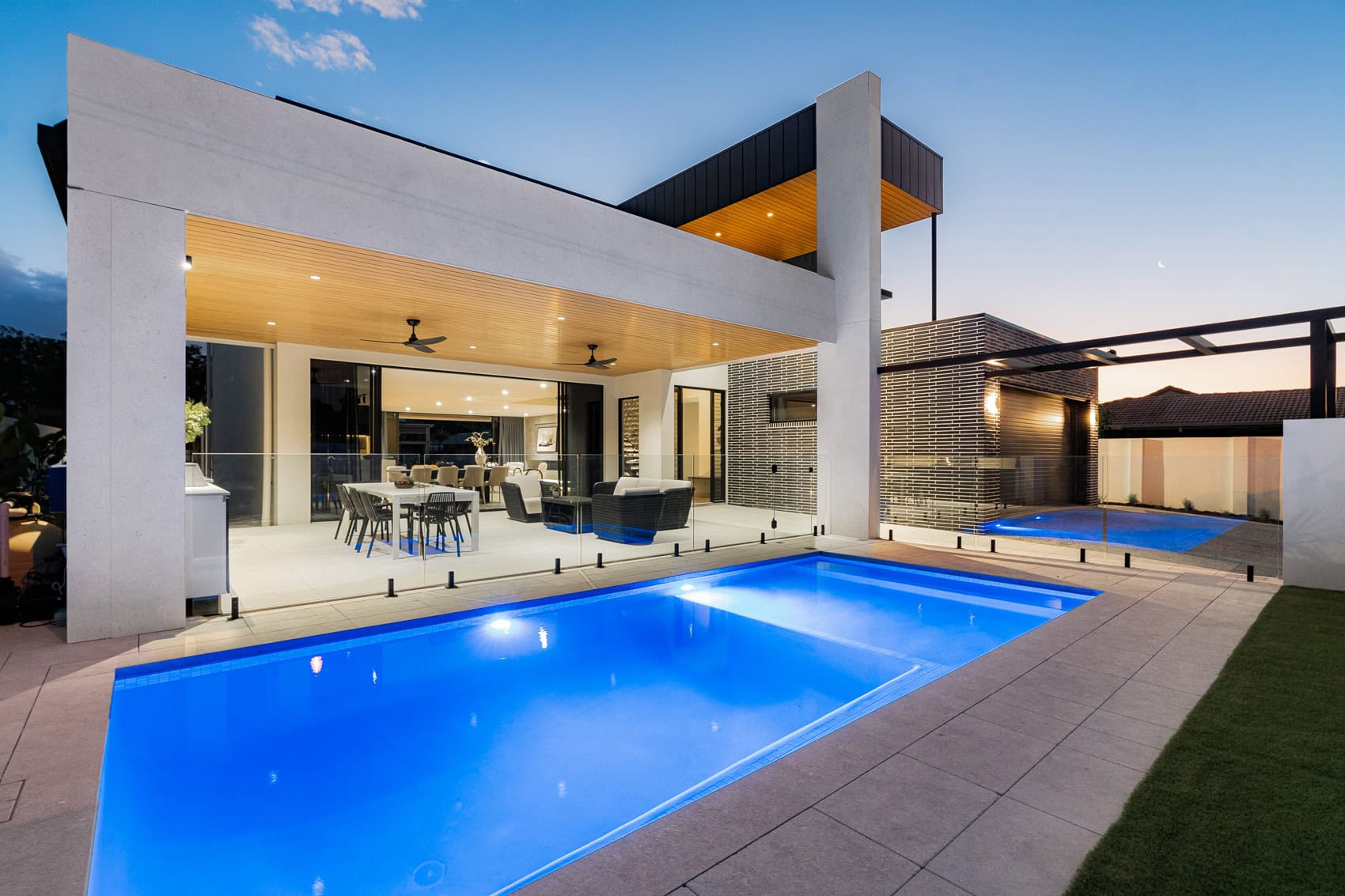
Lynx was engaged to design a fully covered pavilion adjoining the pool area of a Broadbeach Waters canal property. The brief: an entertaining space that remained usable through summer storms without interrupting the view to the water.
The finished structure included insulated roofing, a spotted gum ceiling lining, a fully integrated outdoor kitchen, recessed LED beam lighting, and large-format porcelain paving flowing directly from the pool edge.
By integrating the pavilion into the broader landscape design from the outset rather than treating it as a separate scope, the result feels original to the home. View more completed projects.
Integrating Structures With Your Landscape and Home
An outdoor zone only reaches its potential when it connects with the home’s architecture, the garden, the pool, and the views beyond.
Match the Architecture
The most common error is treating a pergola or pavilion as a product purchase rather than a design decision. Structures that use different materials, proportions, or detailing to the home always feel retrofitted.
- Contemporary rendered home: steel and glass with clean lines
- Traditional Queenslander: timber, pitched rooflines, generous verandah-style overhangs
- Coastal modern: powder-coated aluminium, louvred screens, frameless detailing
Sun Orientation
Sun orientation is a critical variable that cannot be corrected after construction. An alfresco area facing west without adequate shading will be unusable from mid-afternoon through summer. Lynx assesses sun angles, drainage, and site conditions at the design stage as standard practice.
Connection With Pools, Gardens, and Pathways
The most successful outdoor spaces flow naturally from one element to the next. Strategic planting and greenery softens hard structures and adds texture and movement. Large-format paving with clean garden edges creates visual continuity from the entertaining zone to the pool and beyond.
This is equally true for properties in Northern NSW: coastal acreage in Casuarina, Kingscliff, and Pottsville, and hinterland properties outside Tweed Heads and Murwillumbah, all benefit from the same integrated approach.
“The difference between a pergola that feels temporary and one that feels architectural usually comes down to decisions made before construction begins.”
Lynx Landscaping
Materials for Coastal and Subtropical Conditions
Material selection is not purely aesthetic. Salt air, UV exposure, and subtropical rainfall mean the wrong specification degrades quickly and costs significantly more to maintain or replace.
Specify These
- Marine-grade powder-coated aluminium: rated for salt-air exposure; standard powder coating corrodes within a few years near the ocean
- Treated hardwood or composite timber: appropriate treatment and sealing are essential in high-humidity coastal environments
- 316 stainless steel fixings: standard steel fixings rust quickly within 500m of the coastline
- Colorbond or Zincalume roofing: proven performance across Queensland coastal conditions
- Sealed or honed paving under covered areas: unsealed concrete absorbs moisture and stains under a roof
Avoid These
- Standard powder-coated aluminium without coastal-grade treatment in exposed coastal locations
- Untreated softwood in any structural application
- Cheap galvanised fixings near the coast
Planning a pergola or pavilion on the Gold Coast or Northern NSW? Lynx Landscaping provides concept design, material guidance, and complete project management tailored to your property.
Functional Enhancements Worth Planning In
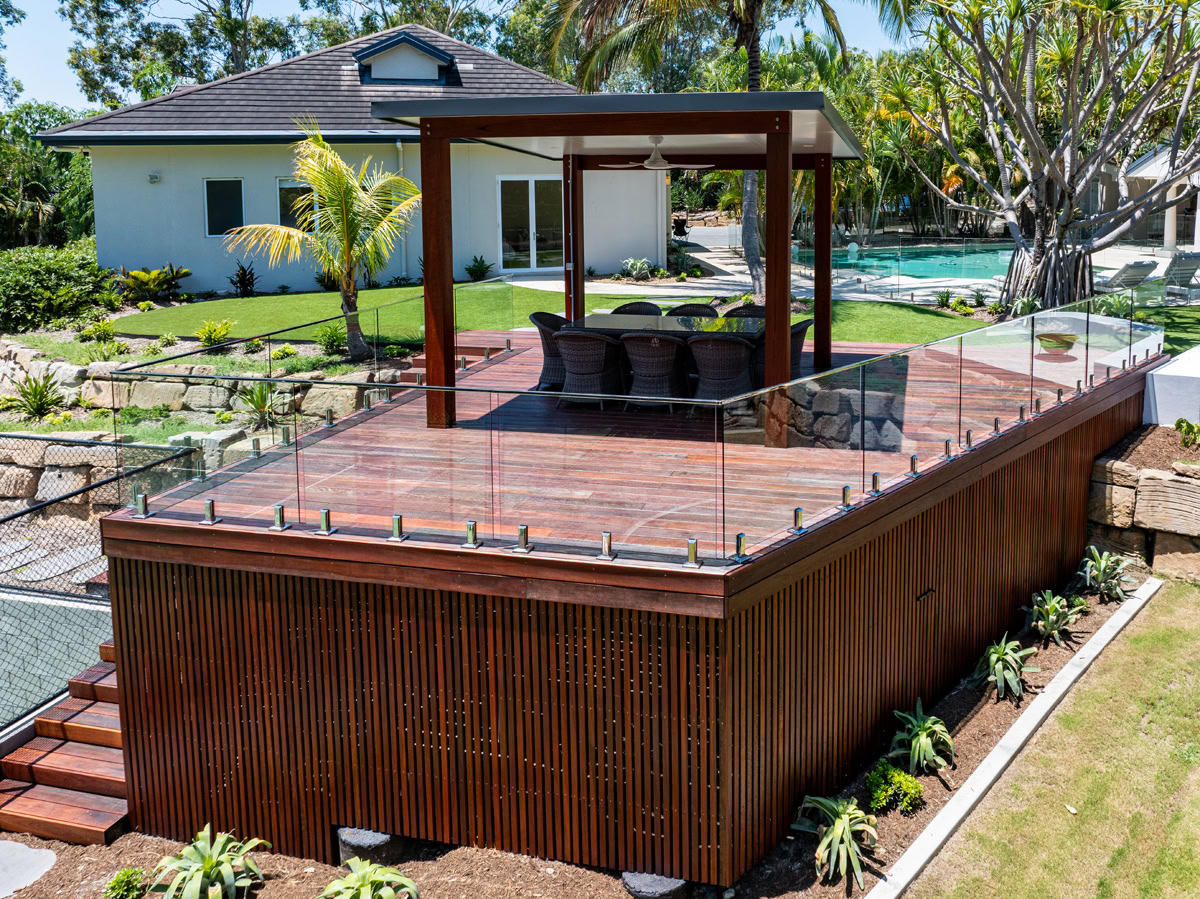
What makes an outdoor area truly usable is everything planned beyond the roofline. Lighting, climate control, screening, and cooking facilities are not optional extras; they are what separates a covered area that gets used from one that does not.
Lighting
Exterior lighting is consistently the highest-impact upgrade to any pergola or pavilion. Warm-tone LED strips recessed into beams, pendants over a dining table, and low-level pathway lighting around the structure create an environment that performs just as well at 9 pm as it does at midday.
Fans and Climate Control
A ceiling fan keeps air moving on still summer evenings and reduces perceived temperature noticeably. Radiant heaters mounted to the structure extend the season into cooler months. Together, they convert a space used occasionally into one that is part of daily life.
Screens and Blinds
Retractable cafe blinds or motorised screens offer flexibility: close the space against afternoon winds or for privacy during a gathering, and fold them fully away when not needed. This is what converts a covered area into a true all-weather room.
Outdoor Kitchens & BBQ Areas
Lynx designs and builds outdoor kitchens and BBQ areas as part of integrated pavilion projects. A built-in barbecue, stone benchtop, outdoor sink, refrigeration drawer, and storage deliver a functional hub that makes alfresco cooking and entertaining genuinely effortless.
Common Design Mistakes to Avoid
- Undersized spans: a pergola that looks substantial in a catalogue can look out of place in a full backyard with a pool and garden. Scale to the space, not to a product range.
- Poor western orientation: Alfresco areas facing west without adequate shading are unusable from mid-afternoon in summer.
- Insufficient drainage: paving under a covered roof collects water. Falls and drainage channels must be designed from the start.
- Standard powder coating near salt air: fails within a few years. Specify marine-grade from the outset.
- Disconnected zones: an entertaining space that requires crossing the lawn to reach the pool feels incomplete. Pathways and pool integration need to be designed together.
- Mismatched materials: a modern steel pergola on a traditional rendered home creates visual tension that is difficult to resolve after the fact.
What Influences Cost
Budget is one of the first questions homeowners ask, and a reasonable one. Costs vary considerably depending on the scope of the project.
The Main Pricing Variables
- Size and roof span
- Roofing type: open pergola, polycarbonate, Colorbond, insulated panel, or concrete tile
- Structural materials: aluminium, steel, or hardwood
- Lighting and electrical scope
- Paving integration and drainage works
- Outdoor kitchen and appliances
- Engineering and council approval requirements
- Site access and existing conditions
Approximate Ranges
A straightforward timber pergola over an existing patio typically starts from $28,000. A fully covered pavilion with outdoor kitchen and integrated landscaping generally starts from $55,000 for mid-range finishes, and above $100,000 for premium custom work with full landscape integration.
A simple pergola and a fully integrated pavilion are fundamentally different project categories. The most effective approach is always to design around how the space will actually be used rather than selecting a product and working backwards.

Planning and Council Considerations
Most residential pergolas on the Gold Coast fall within accepted development criteria and do not require formal approval, provided they meet size, height, and setback requirements under the Gold Coast City Council planning scheme.
As a general guide:
- Structures up to 10m2 and under 2.4m wall height are typically exempt from development approval
- Larger or taller structures may require a building development application
- Properties in Bushfire Prone Areas, relevant to hinterland suburbs including Mudgeeraba, Tallebudgera, Currumbin Valley, and parts of the Northern NSW hinterland around Murwillumbah, carry additional material and siting requirements
- Structures in heritage overlays or within setback zones may have further constraints
Lynx Landscaping manages all relevant council documentation as part of the project scope. Requirements are assessed during the design phase to avoid construction delays.
Always confirm current requirements with Gold Coast City Council or your Lynx Landscaping project manager, as planning conditions can change.
Before You Build: A Quick Checklist
Work through these before committing to a design.
- Confirm sun orientation: identify which direction your entertaining area will face and how the sun moves across it through the day
- Plan for evening use: lighting, fans, and heaters are far easier and cheaper to rough in during construction than to retrofit later
- Design drainage before paving: falls and channels need to be resolved at the structural design stage
- Match materials to the home: visit the main facade and note the colours, textures, and profiles before choosing structure finishes
- Allow adequate clearance and scale: when in doubt, go larger
- Design pathways and pool access as part of the same scope, not separately
- Specify coastal-grade materials if you are within 1km of the ocean or in a high-humidity environment
- Engage a designer before a builder: locking in a design resolves all of the above before any money is spent on materials or labour
Why Work With Lynx Landscaping
The most successful outdoor spaces feel natural to live in: practical during the day, comfortable at night, and visually connected to the home. That is the standard Lynx design for every project.
For homeowners looking beyond standard pergola builders on the Gold Coast, Lynx offers something different: a fully integrated design-to-build process that considers the structure, the landscape, and the architecture together from day one.
Design First, Always
Every project starts with design. Before a post is set, the team understands the property, the client's lifestyle, and how the space will be used day to day. Structures are designed to serve that vision, not assembled from a product catalogue.
End-to-End Project Management
From concept through to construction and landscape integration, Lynx manages every stage with transparent pricing and clear timelines. That consistency earned the team a Landscape Queensland Construction Excellence Award finalist placement in 2024 and 2025.
Built for the Local Environment
Lynx has delivered projects across the full range of Gold Coast and Northern NSW residential properties: waterfront homes on Sovereign Islands and Hope Island, acreage blocks in Tallebudgera Valley and Mudgeeraba, contemporary new estates, and properties along the Northern NSW coast from Tweed Heads through Casuarina, Kingscliff, and Pottsville. View recent projects.
The Lynx Process: Concept to Completion
- Consultation: We meet on-site to understand your vision, lifestyle, budget, and how the space will be used.
- Site Assessment: We assess sun angles, drainage, setbacks, council requirements, and existing site conditions.
- Concept Design: 2D or 3D designs are produced so you can see the finished space before any construction commitment.
- Material Selection: We guide choices based on aesthetics, durability, budget, and site-specific conditions.
- Construction: Our team builds to a fixed scope, timeline, and budget with clear communication throughout.
- Finishing and Landscape Integration: Paving, lighting, planting, and all remaining landscape works are completed so the space feels whole from day one.
Start Designing Your Outdoor Space
If you are planning a pergola, pavilion, or covered outdoor entertaining area on the Gold Coast or Northern NSW, Lynx Landscaping can manage the entire project from concept to completion.
Whether you want:
- a poolside pavilion with outdoor kitchen and integrated dining
- a custom timber or aluminium pergola to frame a patio or garden
- an all-seasons alfresco entertaining zone
- or a complete backyard transformation from design through to build
Arrange an on-site consultation to explore layout options, material choices, and how a pergola or pavilion can integrate seamlessly with your broader landscape plans.
Lynx Landscaping is a Gold Coast-based, award-recognised design-to-build landscaping company with a portfolio of premium residential projects across the Gold Coast and Northern NSW. Fully managed. Transparent pricing. Built to last.
Get in touch online or call 0491 303 867.
Frequently Asked Questions
Do pergolas require council approval on the Gold Coast?
Most pergolas up to 10m2 and under 2.4m wall height are exempt from development approval under the Gold Coast planning scheme. Larger structures and those in bushfire-prone or heritage overlay areas may require an application. Lynx Landscaping assesses all requirements during the design phase.
What is the difference between a pergola and a pavilion?
A pergola has an open, slatted, or louvred roof that provides partial shade and good airflow. A pavilion has a solid roof that provides reliable protection from both rain and sun. Pergolas suit garden framing and patio areas; pavilions function as outdoor rooms for all-season use.
What materials last longest in coastal environments?
Marine-grade powder-coated aluminium, treated hardwood, Colorbond or Zincalume roofing, and 316 stainless steel fixings all perform well in coastal conditions. Standard powder coating, untreated softwood, and galvanised fixings degrade quickly near salt air.
Can a pergola be attached to an existing house?
Yes. Attached pergolas are a common option that creates a seamless indoor-outdoor transition. Structural connections must be correctly engineered and flashed to prevent water ingress. Lynx handles both attached and freestanding structures.
What roofing performs best for outdoor entertaining areas?
Insulated roofing panels reduce heat transfer and rain noise, making them a strong choice for year-round use. Colorbond is durable and low-maintenance. Tiled roofing provides the best visual match with the main residence. Polycarbonate allows light through but can be noisy and retains heat in summer.
Are insulated patio roofs worth it?
In most cases, yes. Insulated panels reduce heat build-up significantly, which matters on the Gold Coast, where a non-insulated metal roof heats up rapidly under direct sunlight. The additional upfront cost is generally recovered in comfort and reduced fan or cooling requirements over time.
How long does the design and construction process take?
A straightforward pergola typically takes two to three weeks for design and one to two weeks to build. A larger pavilion with integrated landscaping may take four to eight weeks from design sign-off to completion. Lynx Landscaping will provide a clear timeline at the outset and communicate throughout the build.